Custom night guards at Lambton Dental
Grinding or clenching your teeth while you sleep, known as bruxism, can wear down enamel, chip teeth and leave your jaw aching in the morning, often without you realizing it is happening. As a night guard dentist in Toronto, our team makes custom-fitted appliances that cushion your teeth and help protect them, and your dental work, through the night.
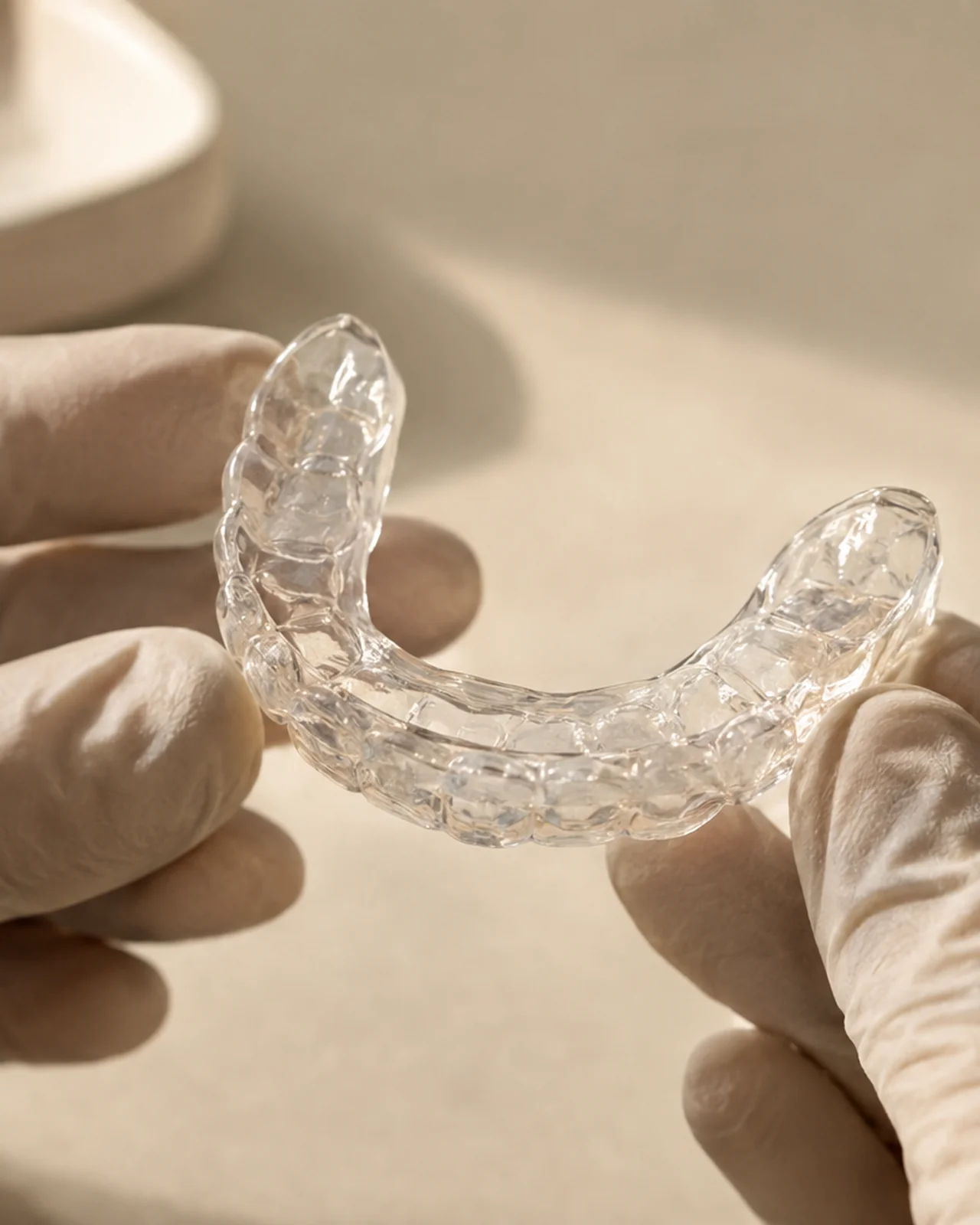
What is a custom night guard?
A night guard is a removable appliance, usually worn over the upper or lower teeth while you sleep, that places a protective layer between the two arches. When you clench or grind, the guard absorbs the force and takes the wear instead of your enamel. Depending on your needs, the dentist may recommend a soft, flexible material, a firmer acrylic, or a dual-layer design that combines a soft inner lining with a hard outer shell.
The word custom matters. Rather than a one-size guard from a pharmacy, a custom night guard is made by a dental lab from an impression of your own teeth, so it fits closely, stays in place and is adjusted by the dentist to sit evenly against your bite. That fit tends to make it more comfortable to wear consistently, which is what makes it useful.


When you might consider a night guard
Many people grind or clench without knowing it, so the signs often show up indirectly. A night guard may be worth discussing if you:
- Wake up with a sore or tired jaw, tight facial muscles or a dull headache around the temples.
- Have teeth that look flattened, worn or shorter than they used to, or edges that have chipped without an obvious cause.
- Notice new sensitivity to cold or sweet foods that may be linked to worn enamel.
- Have been told by a partner that you grind your teeth at night.
- Have fillings, crowns or veneers that you would like to protect from heavy clenching forces.
- Experience clicking or discomfort in the jaw joints that the dentist has connected to clenching.
Wear patterns are often first noticed during a comprehensive exam or routine checkup. Night guards are different from sports mouthguards and from appliances for snoring or sleep apnea, and the dentist will help you understand which, if any, is right for you.
What to expect when you get a night guard at Lambton Dental
- 1
Assessment and discussion
The dentist examines your teeth, jaw joints and muscles, looks for wear patterns and talks with you about symptoms, sleep and stress. Together you decide whether a guard is appropriate and which type suits you.
- 2
Impressions and bite record
We take an impression of your teeth, along with a record of how your upper and lower teeth meet, so the lab can build the guard to your bite.
- 3
Fabrication by a dental lab
The records go to a dental laboratory, where the appliance is made from the material the dentist selected. This usually takes a couple of weeks.
- 4
Fitting and adjustment
At your second visit the dentist seats the guard, checks that it is snug but comfortable and adjusts the biting surface so pressure is distributed evenly across your teeth.
- 5
Care instructions and follow-up
You leave with clear guidance on wearing, cleaning and storing the guard, and we check it at your regular recall visits to make sure it still fits and is holding up.
Some patients take a few nights to get used to sleeping with an appliance. If anything feels tight, loose or uneven after the first week or two, let us know and we will adjust it; small refinements are a normal part of the process.
Looking after your night guard
A night guard lasts longest when it is cared for consistently. Each morning, rinse it under cool water and brush it gently with a soft toothbrush, using mild soap or a cleaner made for dental appliances rather than toothpaste, which can be abrasive. Avoid hot water, since heat may warp the material. Let the guard dry fully before placing it in its ventilated case, and keep the case somewhere pets and small children cannot reach it.
Bring your guard to your recall appointments so the dentist can check its fit and look for cracks, thinning or heavy wear. How long a guard lasts varies with how hard you grind and the material chosen; some patients replace theirs every few years, others sooner. If your bite changes because of new dental work, the guard may need adjusting or remaking. Should your symptoms persist or worsen despite wearing the guard, tell us, because the dentist may want to look further at the causes of your clenching.
Cost, insurance, and CDCP / IFHP coverage
The cost of a custom night guard depends on the type of material and design the dentist recommends, along with the dental lab fee. We give you a written quote at the assessment visit before any impressions are taken, so you can decide with the full picture in front of you.
We accept all major Canadian dental insurance carriers and direct-bill wherever your plan allows. Some plans include night guards under major or preventive services, while others exclude them or limit how often a guard can be replaced, so coverage depends on your plan and we confirm before the appointment. Where useful, we can submit a pre-determination to your carrier first. We are also a provider for the Canadian Dental Care Plan (CDCP) and the Interim Federal Health Program (IFHP); coverage under these programs depends on your eligibility and the services provided, and we will confirm what applies to you before your appointment.
For patients without insurance, we review payment options openly so there are no surprises.
For larger treatment plans, monthly payment plans through a third-party financing partner are available on approved credit — ask at your consultation or see our payment options.

Why patients choose Lambton Dental for night guards
- The dentist assesses your teeth, bite and jaw joints before recommending a guard, so the design matches your situation.
- Every night guard is custom-made by a dental lab from your own impression and adjusted by the dentist at the fitting.
- Follow-up adjustments are part of the process, and your guard is checked at each recall visit.
- We direct-bill CDCP, IFHP and major insurance carriers so you are not left chasing paperwork.
- Our team serves patients in English, French, Italian, Spanish, Portuguese, Hindi, Punjabi, Urdu, Tagalog, Vietnamese, Ukrainian, Mandarin and Cantonese.
- Evening and weekend appointments make it easier to fit the two short visits around your schedule.
Related services
Frequently asked questions about night guards
How do I know if I grind my teeth at night?
Because grinding happens during sleep, many people only learn about it from a partner or from their dentist. Common clues include waking with a sore jaw or headache, teeth that look flattened or chipped, increased sensitivity, and indentations on the tongue or inside of the cheeks. During your exam the dentist looks for these wear patterns and asks about symptoms before suggesting a guard.
Will a night guard stop me from grinding?
A night guard does not usually stop the grinding or clenching itself. Its job is to protect your teeth and dental work by absorbing the force and taking the wear, and many patients find it also eases morning jaw soreness. If stress, sleep habits or bite issues are contributing, the dentist may discuss other approaches alongside the guard.
What is the difference between a custom night guard and one from the pharmacy?
Over-the-counter guards are made in general sizes and are usually softened in hot water and shaped at home, so the fit is approximate and they can be bulky. A custom guard is made by a dental lab from an impression of your teeth, then adjusted by the dentist to your bite. The closer fit is typically thinner, more secure and easier to sleep with.
Upper or lower: which teeth does the guard go on?
Either can work, and the dentist will recommend one based on your bite, any existing dental work, whether you have a gag reflex and how the guard will distribute force. Upper guards are common, but a lower guard is sometimes preferred for comfort or speech. Whichever arch is chosen, the guard is designed to contact the opposing teeth evenly.
How long does it take to get used to wearing a night guard?
Most patients adapt within a week or two. The first few nights can feel unfamiliar, and some people notice extra saliva or a slightly odd sensation when they wake. Wearing the guard for short periods while awake can speed up adjustment. If it still feels tight, loose or uneven after a couple of weeks, book a quick visit and the dentist will refine the fit.
How long will my night guard last?
That depends on how heavily you grind and the material selected. Firmer acrylic guards generally hold up longer than soft ones, and heavy grinders wear through any guard faster. The dentist inspects your guard at recall visits for cracks, thinning or a changed fit and will let you know when a repair or replacement is worth considering.
Can a night guard help with jaw pain or headaches?
For some patients, yes. When morning jaw soreness or tension headaches are linked to overnight clenching, cushioning the teeth and spreading the load can reduce strain on the muscles and joints. Results vary from person to person, and the dentist will explain what is reasonable to expect in your case and suggest further assessment if symptoms do not improve.
Book a night guard assessment
Book online or call (416) 666-3700 to arrange an assessment. The dentist will examine your teeth and jaw and let you know whether a custom night guard is a good fit for you.
CDCP welcome
We welcome patients covered under the Canadian Dental Care Plan and can help you understand what's covered.
Learn about CDCP →IFHP welcome
We are registered to treat patients under the Interim Federal Health Program and bill Medavie Blue Cross directly.
Learn about IFHP →Direct billing
We bill all major Canadian dental insurance carriers directly, so you pay only what your plan does not cover.
How direct billing works →