Surgical extractions and oral surgery at Lambton Dental
When a tooth is broken below the gumline, is impacted or has complex roots, a surgical extraction may be needed to remove it safely. At Lambton Dental in West Toronto, minor oral surgery is planned with digital imaging and performed by the dentist in-house wherever it can be done comfortably and predictably, with sedation available for patients who prefer it.

What is a surgical extraction?
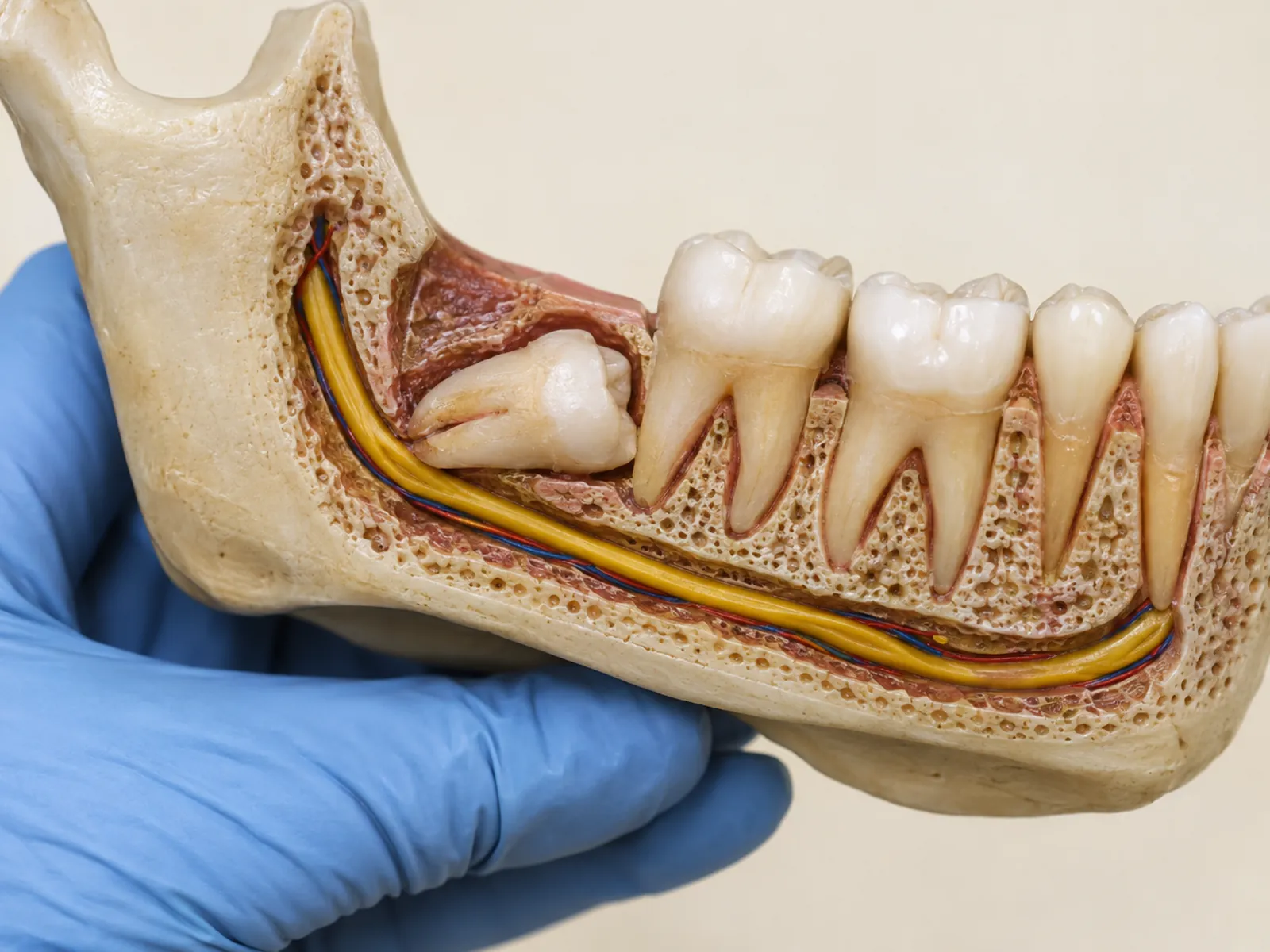
A surgical extraction is used when a tooth cannot be removed with instruments through the socket alone. This may be because the tooth is broken below the gumline, is impacted under gum or bone, has curved or fused roots, or is fused to the surrounding bone. In these cases the dentist makes a small incision to lift the gum, and where needed, the tooth is sectioned so it can be removed in pieces through a smaller opening. Stitches are often placed at the end of the procedure and frequently dissolve on their own.
Minor oral surgery at Lambton Dental also covers related in-office procedures — for example, exposure of a tooth, small biopsies of soft-tissue lesions, socket-preservation bone grafts at the time of extraction and simple frenectomies. Complex cases, or patients whose medical history calls for a hospital or oral surgeon setting, are referred to an oral surgeon when that is the right call.

When surgical extraction or oral surgery is the right choice
A surgical approach may be needed when:
- A tooth has broken off at or below the gumline and cannot be gripped with instruments alone.
- A tooth is impacted under gum or bone — most often a wisdom tooth, but sometimes a canine or another tooth blocked from erupting.
- A root or root tip is retained in the bone after a previous extraction and needs to be removed.
- A tooth has curved, hooked or unusually shaped roots seen on X-ray that suggest a straightforward extraction is unlikely to work.
- A small area of gum or bone needs to be reshaped, a lesion sampled for biopsy, or a socket preserved with a bone graft at the time of extraction.
Where a case is clearly better suited to an oral surgeon — for example, a deeply impacted tooth close to the nerve, a large lesion, or a patient whose health history calls for a hospital setting — we say so and refer appropriately. Where a simpler non-surgical extraction is enough, the dentist will not overtreat.
What to expect with oral surgery at Lambton Dental
- 1
Assessment and imaging
The dentist examines the area and reviews an X-ray — a panoramic X-ray and, where useful, a cone-beam CT scan — so the tooth's roots and any nearby structures can be seen clearly before treatment.
- 2
Planning and consent
The dentist explains what the procedure involves, the expected recovery, the risks and any alternatives, so consent is informed. Instructions for the day of surgery are provided.
- 3
Medical review
Your health, medications and allergies are reviewed carefully — some blood thinners, bisphosphonates, immune conditions or diabetes affect planning and healing.
- 4
Comfort and freezing
On the day, the area is numbed with local anaesthetic. Nitrous oxide, oral sedation and IV sedation are available if you would like it, after the dentist confirms your health history.
- 5
Surgery
A small incision is made to lift the gum where needed. The tooth is loosened, sectioned if that helps it come out through a smaller opening, and removed. The site is cleaned, any planned grafting is placed, and stitches close the area.
- 6
Aftercare instructions
You leave with clear guidance on bleeding, swelling, eating, oral hygiene and any medication, along with a plan to review the site and remove non-dissolving stitches if needed.
If sedation is used, you must have a responsible adult drive you home and, ideally, stay with you for the rest of the day. This is arranged when the appointment is booked.
Healing after oral surgery
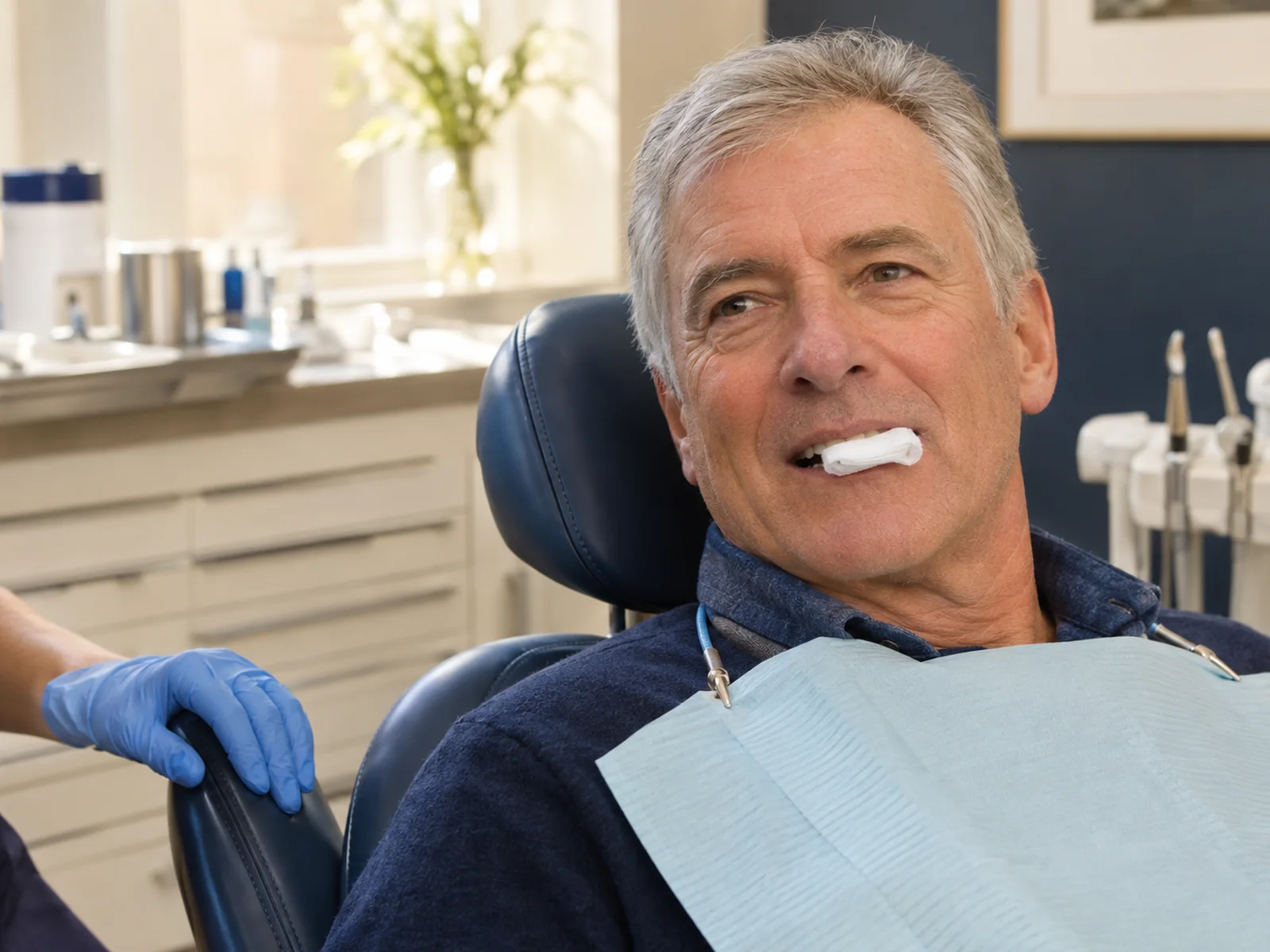
Swelling, bruising and stiffness are common for several days after a surgical extraction, usually peaking around day two or three. Bite gently on the gauze for about 30 minutes and change it until bleeding slows. Cool compresses on the outside of the face help for the first day; gentle warm compresses after 48 hours ease stiffness.
Eat soft, cool foods on the other side for the first day and stay well hydrated. For the first 24 hours, avoid rinsing forcefully, spitting, drinking through a straw, smoking and hot foods so the protective blood clot is not disturbed. Start gentle salt-water rinses after the first day and keep the mouth clean with careful brushing. Persistent, throbbing pain a few days after the surgery can be a sign of dry socket, which is easily treated at a short visit, so please contact us. Once the site has settled, the dentist reviews replacement options such as a single-tooth implant, a bridge or a partial denture if you want the tooth replaced.
Cost, insurance, and CDCP / IFHP coverage
The cost of a surgical extraction or minor oral surgery depends on how deeply the tooth or roots are positioned, whether sedation is used and whether procedures such as bone grafting are planned at the same visit. The dentist provides a written estimate after the assessment and imaging, and financing is available for treatment plans that need it.
We accept all major Canadian dental insurance carriers and direct-bill wherever your plan allows. Most plans cover surgical extractions under basic or surgical services, often at a different percentage than simple extractions. Where useful, we submit a pre-determination to your carrier so you know your out-of-pocket portion before the appointment. Lambton Dental is also a provider for the Canadian Dental Care Plan (CDCP) and the Interim Federal Health Program (IFHP); coverage depends on your eligibility and the specific procedure codes, and we will confirm what applies before your appointment.
For patients without insurance, our payment options page explains billing openly.
For larger treatment plans, monthly payment plans through a third-party financing partner are available on approved credit — ask at your consultation or see our payment options.

Why patients choose Lambton Dental for oral surgery
- Cases are planned with digital imaging so roots and nearby structures are seen clearly before treatment.
- The dentist performs minor oral surgery in-house wherever it can be done comfortably and predictably, and refers complex cases to an oral surgeon when that is the right call.
- Comfort is a priority: topical numbing, careful freezing and nitrous, oral or IV sedation are available after a health review.
- Socket-preservation grafts, where appropriate, are discussed at the extraction visit to help protect future implant or bridge options.
- We direct-bill CDCP, IFHP and major insurance carriers wherever your plan allows, and we submit pre-determinations for surgical work.
- Our team serves patients in English, French, Italian, Spanish, Portuguese, Hindi, Punjabi, Urdu, Tagalog, Vietnamese, Ukrainian, Mandarin and Cantonese.
Related services
Frequently asked questions about oral surgery
What is the difference between a simple and a surgical extraction?
A simple extraction removes a tooth that is fully visible in the mouth using instruments through the socket. A surgical extraction is used when a tooth is broken below the gumline, impacted or has complex roots, and involves a small gum incision and sometimes sectioning the tooth so it comes out through a smaller opening. The dentist reviews which category your tooth falls into after the X-ray.
Does surgical extraction hurt?
The area is numbed with local anaesthetic, and sedation is available if you would like it, so most patients find the appointment itself comfortable. Some swelling, bruising and stiffness for several days afterwards is normal, and most patients manage well with over-the-counter pain relief and any medication the dentist provides.
Will I need stitches?
Often, yes. Stitches close the gum where the incision was made and support early healing. Many stitches used at Lambton Dental dissolve on their own over a couple of weeks. Non-dissolving stitches are removed at a short follow-up visit that we book at the same time.
How long is recovery after a surgical extraction?
Most patients feel much better within about a week, though tenderness and stiffness can linger a little longer with deeper extractions. Planning a couple of quiet days at home, particularly for the first 48 hours, is sensible. Full bone healing under the gum continues for several months and is not something you feel.
What is socket preservation, and do I need it?
After a tooth is removed, the bone in the socket naturally shrinks as it heals. Placing a small bone graft into the socket at the time of extraction — called socket preservation — helps maintain the shape and volume of bone so that a future implant or bridge has a better foundation. The dentist will discuss whether it makes sense for your case.
Are complex cases handled here or referred out?
Many minor oral surgery cases are handled comfortably in-house, and that is often more convenient. Deeply impacted teeth close to the nerve, large lesions and patients whose medical history calls for a hospital setting are referred to an oral surgeon when that is the right call, and we will say so honestly.
Can I use CDCP or IFHP for oral surgery?
Surgical extractions are typically covered under basic or surgical services in both the Canadian Dental Care Plan and the Interim Federal Health Program, subject to your eligibility and the specific procedure codes. We confirm what applies to you and any co-payment before your appointment.
Book a surgical consultation
Book online or call (416) 666-3700 to arrange a consultation. The dentist will review your imaging, explain your options honestly and provide a written estimate before any surgery is booked.
CDCP welcome
We welcome patients covered under the Canadian Dental Care Plan and can help you understand what's covered.
Learn about CDCP →IFHP welcome
We are registered to treat patients under the Interim Federal Health Program and bill Medavie Blue Cross directly.
Learn about IFHP →Direct billing
We bill all major Canadian dental insurance carriers directly, so you pay only what your plan does not cover.
How direct billing works →