Single-tooth dental implants at Lambton Dental
A single-tooth dental implant replaces a missing tooth from the root up, using a small titanium post placed in the jawbone and a custom crown on top. At Lambton Dental in West Toronto, implants are planned with digital imaging and placed by the dentist. New patients can start with a complimentary implant consultation.

What is a single-tooth dental implant?
A dental implant is a small titanium post that acts as a replacement tooth root. Once placed in the jawbone, it heals and integrates with the surrounding bone over a few months in a process called osseointegration. A connector, called an abutment, is then attached to the implant, and a custom crown is fitted on top so the tooth looks and functions like your natural teeth.
Because the implant sits within the bone rather than resting on it, chewing forces are transferred through the implant into the jaw much like a natural root, which helps preserve bone shape over time. Neighbouring teeth do not need to be shaped or crowned to support the replacement, which is one of the key differences from a dental bridge.


When a single-tooth implant is the right choice
An implant may be a good option when:
- You are missing a single tooth, or a tooth needs to be removed, and you would like a fixed replacement that does not involve altering the neighbouring teeth.
- You have adequate bone height and width in the area, or you are willing to consider grafting to build up the site if needed.
- Your gums are healthy or can be brought to a healthy state before treatment begins.
- Your general health supports elective surgery, which the dentist reviews with you at the consultation.
If the neighbouring teeth already need crowns, a bridge may be an efficient alternative. If several teeth in a row are missing, full-arch implant solutions may be considered. The dentist explains the trade-offs honestly in a written plan before anything proceeds.
What to expect with a single-tooth implant at Lambton Dental
- 1
Complimentary implant consultation
The dentist examines the site, reviews your dental and medical history and takes appropriate imaging, then explains whether an implant is a suitable option for you.
- 2
Planning with 3D imaging
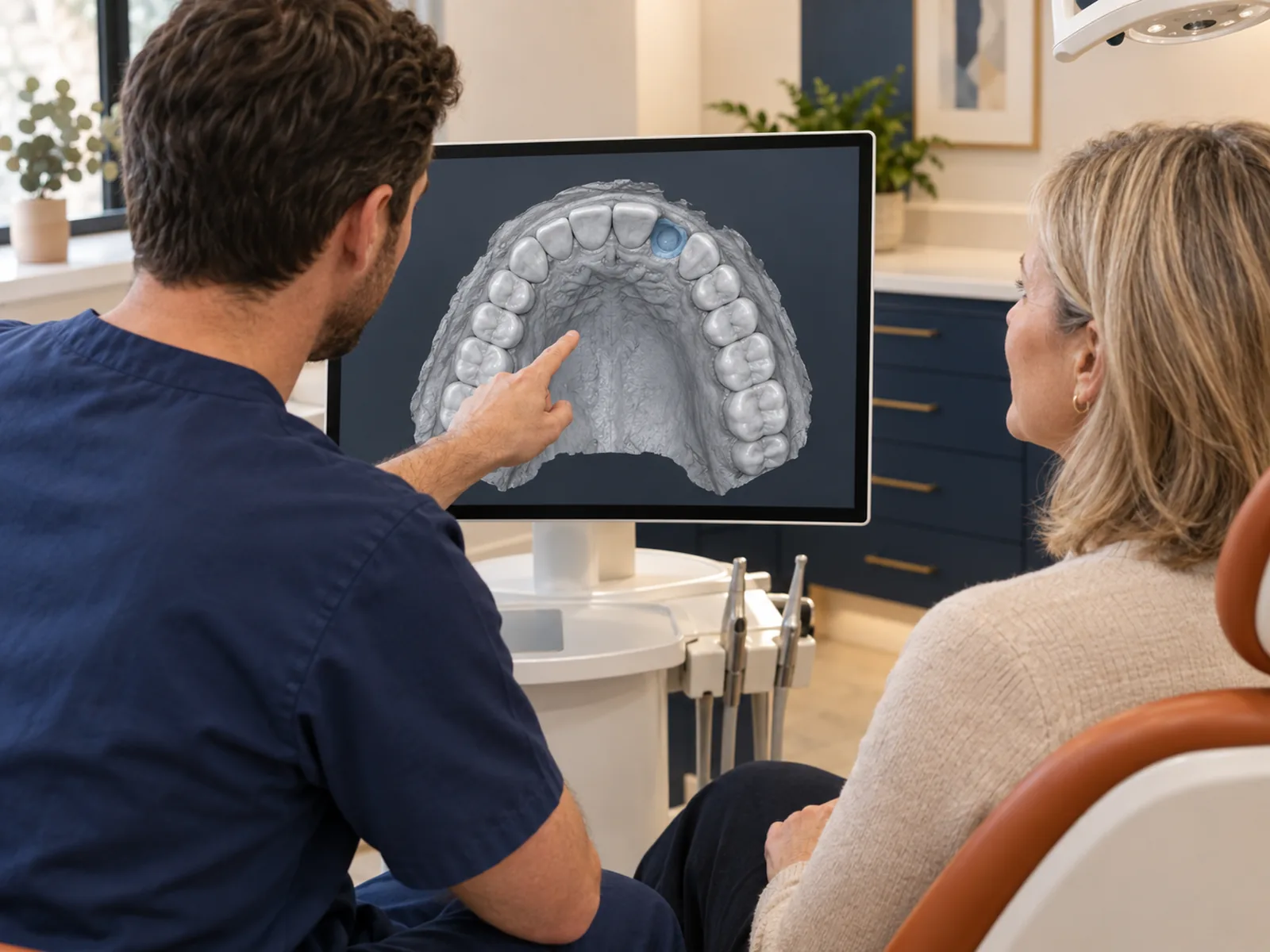
Where indicated, a cone-beam CT scan is used to plan the implant position digitally so it is placed in the ideal location for bone, nerve safety and the final crown.
- 3
Extractions and grafting, if needed
If a tooth still needs to be removed, or if the site needs a bone or soft-tissue graft, that is completed first. Some cases allow the implant to be placed at the same visit as the extraction.
- 4
Implant placement
Under local anaesthetic — with sedation available if you prefer — the implant is placed into the prepared site. Most patients return to normal activity the next day.
- 5
Healing period
The implant integrates with the bone over roughly three to six months. During this time you may wear a temporary tooth, and we check the site along the way.
- 6
Abutment and crown
Once healing is complete, the abutment and custom crown are fitted, the bite is checked and adjusted, and the restoration is cared for like a natural tooth.
Nitrous oxide, oral sedation and IV sedation are available for anxious patients; the dentist reviews your health history first. See our sedation options page for more.
Living with your new implant
Mild swelling and tenderness at the site are common for a few days after implant placement, and most patients manage well with the guidance and any medication the dentist provides. Soft foods, cool compresses, gentle rinsing with warm salt water and avoiding smoking are usually recommended during early healing. If the site feels unusually painful, keeps bleeding or feels loose, please contact us so it can be checked promptly.
Once the crown is fitted, the implant is cared for much like a natural tooth. Brushing twice a day, flossing carefully around the implant crown and coming in for regular professional cleanings and exams gives the implant the greatest chance of a long service life. If you clench or grind, the dentist may recommend a custom night guard to protect the crown. The implant, abutment and crown are checked at each recall visit.
Cost, insurance, and financing for implants
The cost of a single-tooth implant depends on whether an extraction, bone graft or sinus procedure is needed, on the components used, and on the crown material. A full written estimate is provided after the complimentary consultation, and monthly financing is available for treatment plans that need it, so the decision is unhurried.
We accept all major Canadian dental insurance carriers and direct-bill wherever your plan allows. Implant coverage varies widely between plans — some cover the crown but not the implant post, others cover part of both, and many have an annual maximum that affects timing. Where useful, we submit a pre-determination to your carrier so you know your out-of-pocket portion before treatment starts. Lambton Dental is also a provider for the Canadian Dental Care Plan (CDCP) and the Interim Federal Health Program (IFHP); coverage for implants under these programs depends on your eligibility and the specific procedure codes, and we will confirm what applies before your appointment.
For patients without insurance, our payment options page explains billing and monthly financing openly.
For larger treatment plans, monthly payment plans through a third-party financing partner are available on approved credit — ask at your consultation or see our payment options.


Why patients choose Lambton Dental for single-tooth implants
- Implants are planned with digital imaging and placed by the dentist, with a complimentary consultation to review whether the option suits you.
- The dentist explains the trade-offs between implants, bridges and partials honestly so you can weigh the choice for your mouth and budget.
- Comfort is a priority: topical numbing, gentle freezing and, for anxious patients, sedation options are available after a health review.
- We direct-bill CDCP, IFHP and major insurance carriers wherever your plan allows, submit pre-determinations for major work and offer monthly financing.
- Evening and weekend appointments make it easier to fit the series of visits around your schedule.
- Our team serves patients in English, French, Italian, Spanish, Portuguese, Hindi, Punjabi, Urdu, Tagalog, Vietnamese, Ukrainian, Mandarin and Cantonese.
Related services
Frequently asked questions about single-tooth implants
How long does implant treatment take from start to finish?
A straightforward case typically takes three to six months from placement to final crown, most of which is healing time while the implant integrates with the bone. Cases that need extraction, bone grafting or sinus work take longer. The dentist gives you a realistic timeline after the consultation and imaging.
Is implant placement painful?
The site is numbed with local anaesthetic, and sedation is available if you would like it, so most patients find the appointment itself comfortable. Some tenderness, swelling and bruising for a few days afterwards is normal, and over-the-counter pain relief is usually enough. Persistent pain or unusual bleeding should be reported so the dentist can check the site.
How long do dental implants last?
Longevity varies from patient to patient. Many implants remain in service for well over a decade when the surrounding gum and bone stay healthy and the patient keeps up with regular cleanings, exams and careful home care. Uncontrolled gum disease, heavy grinding without a guard and smoking are among the main factors that shorten implant service life.
Am I a candidate for an implant?
Most healthy adults with adequate bone in the area are candidates. Conditions such as uncontrolled diabetes, active gum disease, some medications and heavy smoking can affect healing and are reviewed carefully at the consultation. If the site does not currently have enough bone, grafting may be discussed as a way to build it up.
Can the implant be placed the same day as an extraction?
In some cases, yes. Immediate implant placement can be a good option when the surrounding bone and gum are healthy and infection-free. In others, the dentist will recommend allowing the site to heal first for a more predictable result. The imaging and clinical exam guide the decision.
What is the difference between a single-tooth implant and a bridge?
An implant replaces the tooth root and crown independently, without touching the neighbouring teeth. A bridge relies on crowns cemented onto the neighbouring teeth to hold a replacement tooth in the middle. An implant tends to preserve more of the surrounding tooth structure and bone, while a bridge can be faster and, in some cases, less costly. The dentist reviews both with you.
How much does a single-tooth implant cost at Lambton Dental?
The final cost depends on whether an extraction, bone graft or sinus procedure is needed, on the components used and on the crown material. A written estimate is provided after your complimentary implant consultation, and monthly financing options are reviewed with you so you can plan the treatment without pressure.
Book your complimentary implant consultation
New patients can start with a complimentary implant consultation. The dentist will assess suitability, discuss timeline and options, and provide a written treatment plan and quote. There is no obligation to book further treatment.
CDCP welcome
We welcome patients covered under the Canadian Dental Care Plan and can help you understand what's covered.
Learn about CDCP →IFHP welcome
We are registered to treat patients under the Interim Federal Health Program and bill Medavie Blue Cross directly.
Learn about IFHP →Direct billing
We bill all major Canadian dental insurance carriers directly, so you pay only what your plan does not cover.
How direct billing works →