Oral cancer screening at Lambton Dental
An oral cancer screening is a short, careful look at the soft tissues of the mouth, throat and neck to pick up changes that are easy to miss. The dentist performs it at routine visits at Lambton Dental, adding only a few minutes to your appointment while giving you a clear answer about what we see.
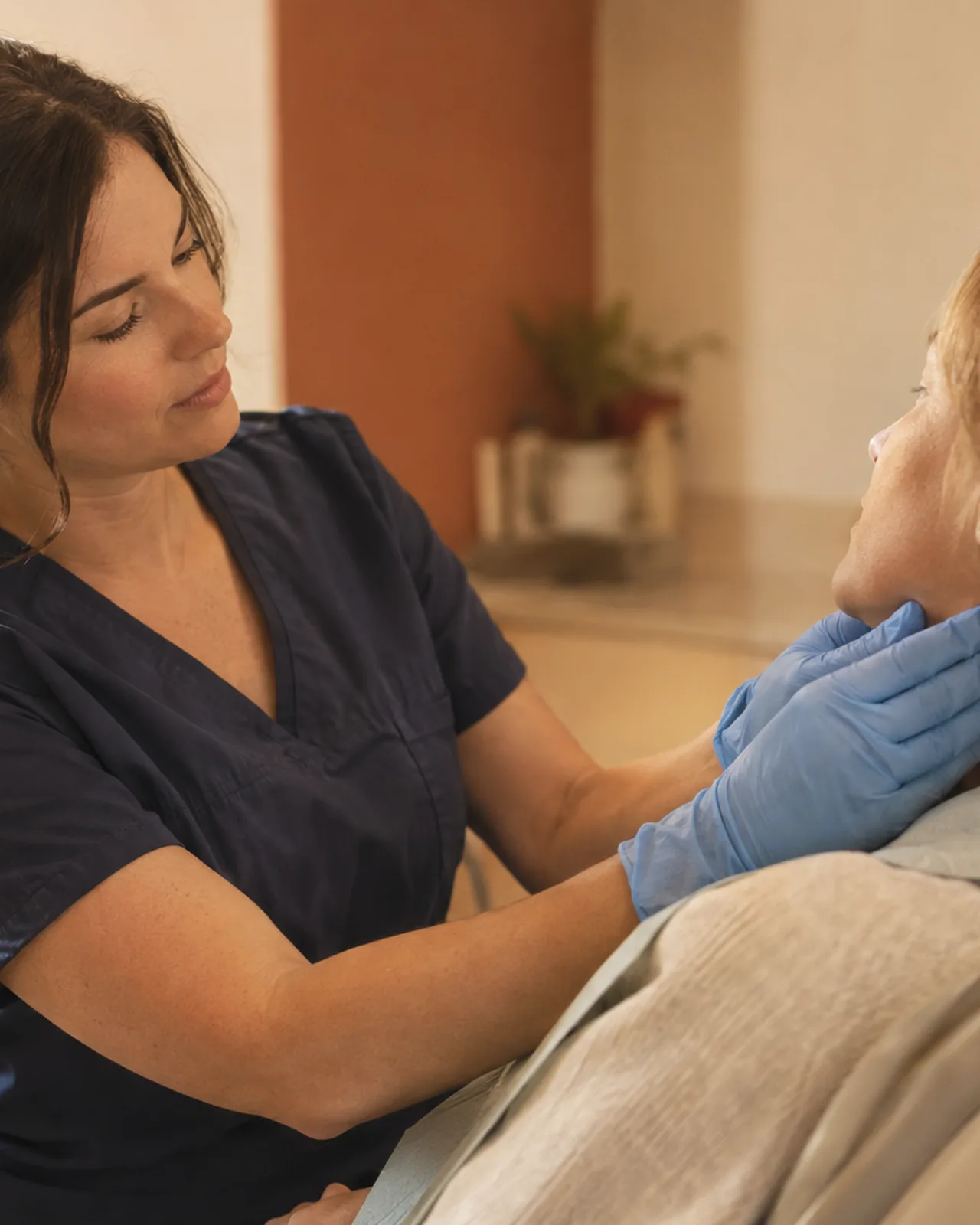
What does an oral cancer screening involve?
An oral cancer screening is a visual and tactile examination of the mouth and surrounding areas. The dentist looks at the lips, the inside of the cheeks, the roof and floor of the mouth, the gums, the top, sides and underside of the tongue, and the back of the throat. Using gloved hands, the dentist also gently feels the floor of the mouth, the jaw and the sides of the neck for lumps, firmness or tenderness. The whole process typically takes a few minutes and needs no special preparation.
We are looking for changes such as red or white patches, sores that have not healed, thickened areas, unusual lumps or numbness. Most findings turn out to be harmless, such as irritation from a sharp tooth or a bitten cheek. Where something is unusual, the dentist explains what was seen and outlines the next step, which may be a short recheck or a referral for further assessment.
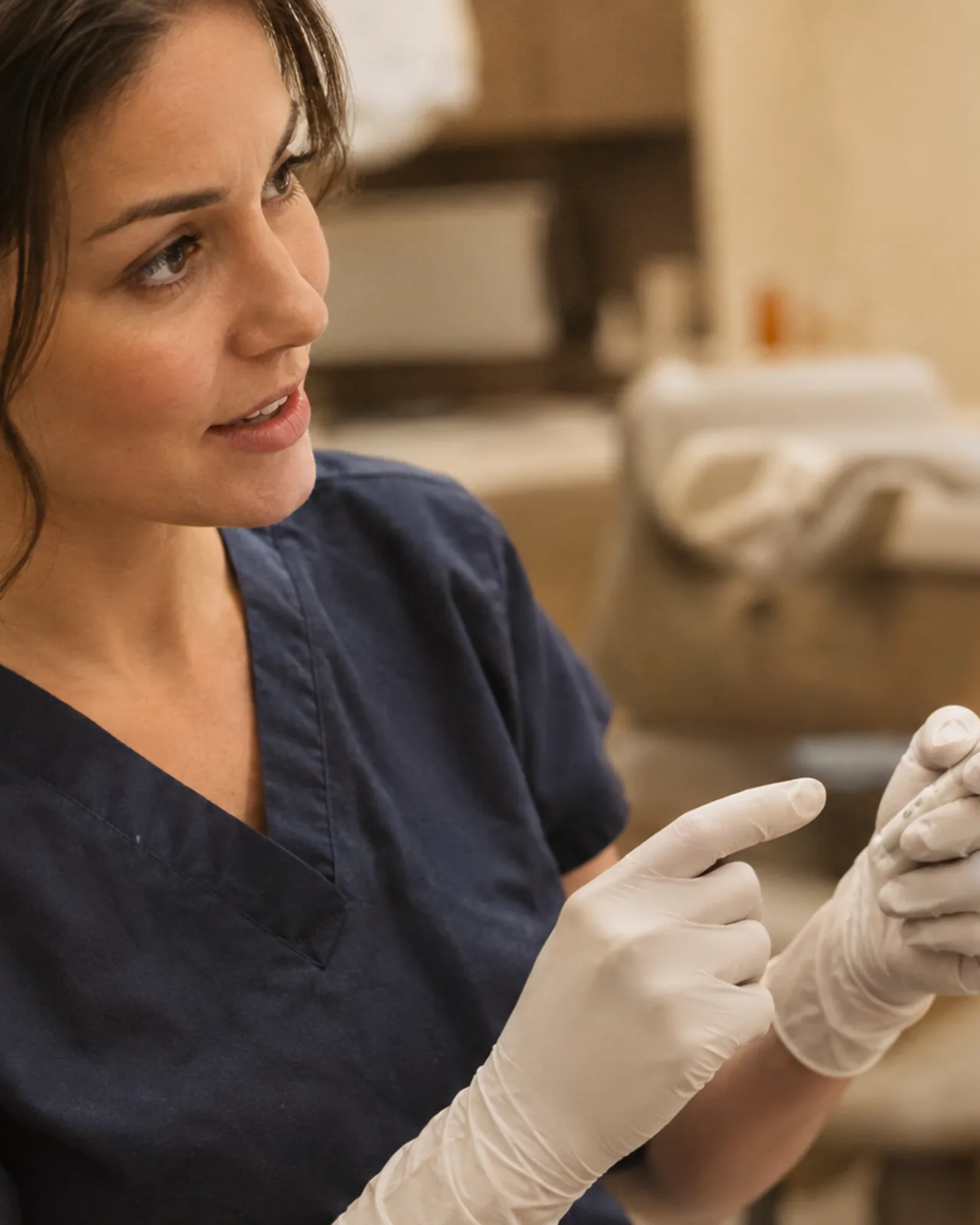

Who benefits from regular oral cancer screening?
Early changes in the mouth often cause no symptoms, so screening is useful for every adult, not only those who consider themselves at risk. It is particularly worth staying current if you:
- Smoke, vape or use chewing tobacco, or have done so in the past.
- Drink alcohol regularly, particularly in combination with tobacco use.
- Spend a lot of time outdoors with the lips exposed to the sun, or have had sun damage to the lips.
- Have been told you carry the human papillomavirus (HPV), or have a family history of head and neck cancers.
- Have noticed a sore, patch, lump or rough area in the mouth that has lasted more than two weeks.
- Have difficulty swallowing, a persistent hoarse voice or a feeling that something is stuck in the throat.
If a specific spot worries you, there is no need to wait for a routine recall exam. Call us for a focused assessment; same-day appointments are available when the concern is urgent.
What to expect during your screening
- 1
A few questions first
The dentist asks about tobacco and alcohol use, sun exposure, any past head and neck conditions, and whether you have noticed sores, lumps or changes in how your mouth feels.
- 2
Examination of the lips and face
We look at the outside of the lips and the skin around the mouth, then gently feel the jaw and the lymph nodes along the sides of the neck and under the chin.
- 3
A look inside the mouth
Using a light and a small mirror, the dentist checks the cheeks, gums, palate and floor of the mouth. You may be asked to remove dentures or a removable appliance so we can see the tissue underneath.
- 4
Tongue and throat
A piece of gauze helps the dentist hold the tongue gently to view its sides and underside, which are common places for changes to appear. You will be asked to say ahh so we can view the back of the throat.
- 5
Review of what we found
If everything looks healthy, we tell you so and note it in your chart as a baseline. If anything is unusual, we describe it, record it for comparison, and explain the recommended follow-up.
Most people find the screening easy to sit through, though the gauze on the tongue and the pressure on the neck can feel a little odd. Let us know if you have a strong gag reflex and we will pace things accordingly.
What happens if the dentist finds something unusual
Finding an unusual area does not mean cancer. Many changes in the mouth are caused by friction, a rough filling, a burn from hot food or a minor infection, and they resolve on their own. When the dentist spots something that does not have an obvious cause, the usual first step is to note its size, colour and location, remove any likely irritant, and ask you to return for a recheck to see whether it has healed.
If the area is still present at the recheck, or if its appearance calls for a closer look right away, the dentist will refer you to an oral surgeon, oral medicine clinic or your physician for further assessment, which may include a biopsy. We send the referral with our notes so the receiving clinic has the full picture, and we follow up with you afterwards. You will always know what we saw, why we are recommending a next step and what that step involves.
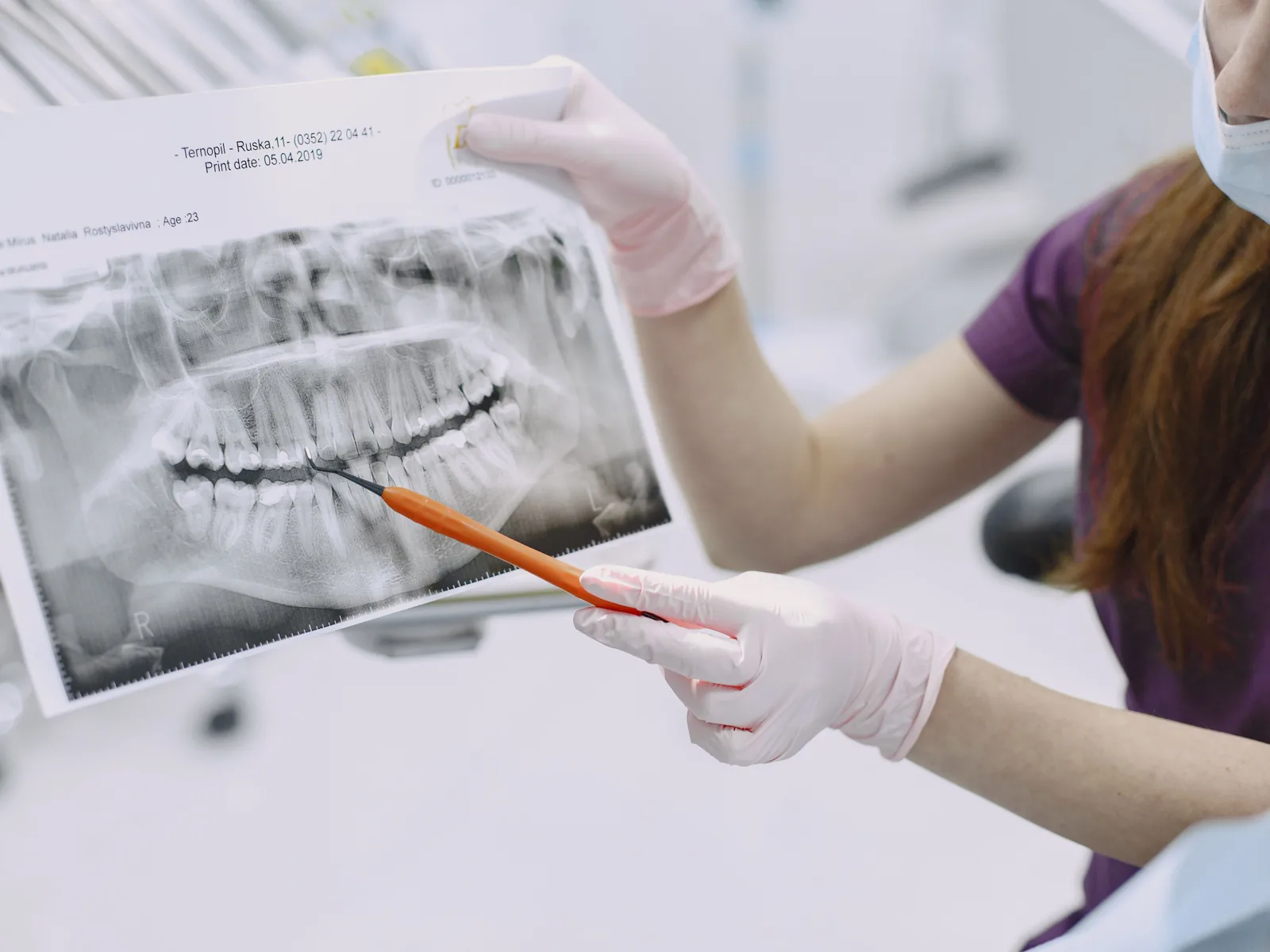
Cost, insurance, and CDCP / IFHP coverage
The soft-tissue examination is usually performed at the same visit as a comprehensive exam or recall checkup. Fees depend on what is done at your visit, and we explain them before we begin, whether that is a routine exam or a focused assessment of a specific concern.
We accept all major Canadian dental insurance carriers and direct-bill wherever your plan allows, so you pay only your portion at the visit. We are also a provider for the Canadian Dental Care Plan (CDCP) and the Interim Federal Health Program (IFHP); coverage under these programs depends on your eligibility and the services provided, and we will confirm what applies to you before your appointment.
New adult patients can start with our $99 new patient cleaning, which brings together a cleaning, an exam and any necessary X-rays on the first visit. A treatment plan and quote, if needed, are provided separately. See payment options for more.
For larger treatment plans, monthly payment plans through a third-party financing partner are available on approved credit — ask at your consultation or see our payment options.

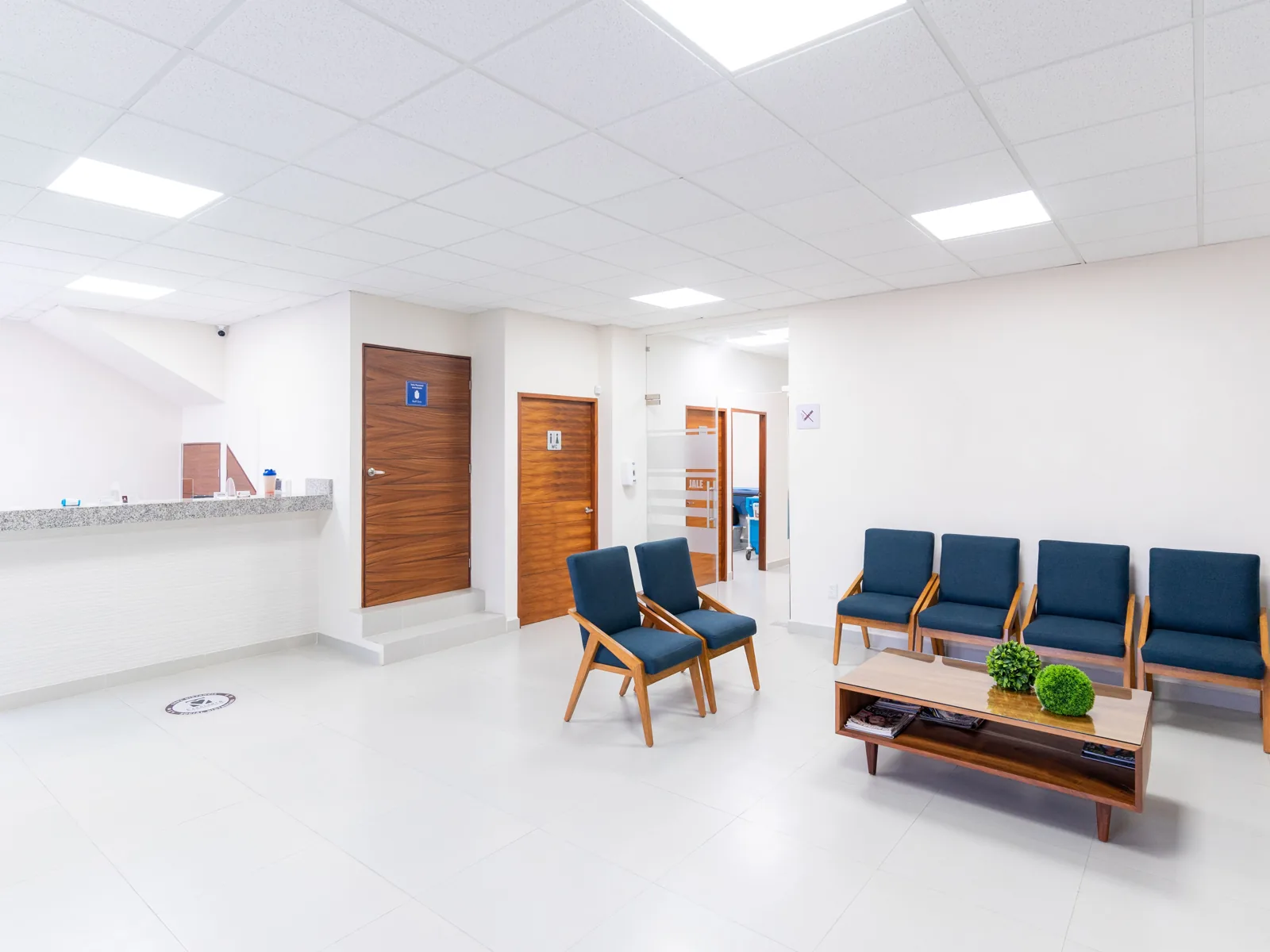
Why patients choose Lambton Dental for oral cancer screening
- The soft tissues of the mouth, throat and neck are examined at routine visits, not only when you raise a concern.
- We explain what we see in plain language and tell you clearly when something is nothing to worry about.
- When a referral is needed, we coordinate it, send our notes, and follow up with you afterwards.
- Evening and weekend appointments make it easier to stay on schedule with regular exams.
- We direct-bill CDCP, IFHP and major insurance carriers so you are not left chasing paperwork.
- Our team serves patients in English, French, Italian, Spanish, Portuguese, Hindi, Punjabi, Urdu, Tagalog, Vietnamese, Ukrainian, Mandarin and Cantonese.
Related services
Frequently asked questions
How often should I have an oral cancer screening?
For most adults, having the soft tissues examined at each routine checkup is a sensible rhythm, since that visit already happens once or twice a year. The dentist may suggest looking more often if you use tobacco, drink heavily, have had a previous suspicious finding or have another risk factor. Between visits, mention any sore or patch that lasts longer than two weeks.
Does the screening hurt?
The screening is a visual and hands-on exam, with no needles, drilling or scraping. You may feel gentle pressure when the dentist checks the neck and the floor of the mouth, and the gauze used to hold the tongue can feel unusual. Most people describe the experience as slightly awkward rather than uncomfortable, and it is over in a few minutes.
Do you use a special light or rinse for the screening?
Our screening relies on careful visual inspection under good lighting and on feeling the tissues by hand. These remain the foundation of oral cancer screening in dental practice. If the dentist believes additional assessment would help, the next step is a referral for a closer look, which may include a biopsy, rather than an in-office test.
What are the early signs of oral cancer I should watch for?
Watch for a sore that does not heal within two weeks, a red or white patch, a lump or thickening inside the mouth or on the neck, numbness, unexplained bleeding, loose teeth without an obvious cause, difficulty swallowing or a change in your voice. None of these confirms cancer, but each is worth having examined promptly rather than waiting for your next scheduled visit.
I do not smoke or drink. Do I still need to be screened?
Yes. Tobacco and alcohol raise risk, but oral and throat cancers also occur in people who have never used either, and HPV-related cases are increasingly recognised in younger, healthier adults. Because early changes are usually easy to miss, a routine look by someone who knows what to watch for is valuable for everyone, regardless of lifestyle.
What happens if I am referred for a biopsy?
A biopsy means a small sample of tissue is taken and examined under a microscope to find out exactly what the area is. It is the standard way to get a definite answer, and being referred for one does not mean the result will be cancer. We send our notes with the referral and stay in touch with you through the process.
Book your exam and screening
New adult patients can start with our $99 new patient cleaning, which brings together a cleaning, exam and necessary X-rays. A treatment plan and quote, if needed, are provided separately.
CDCP welcome
We welcome patients covered under the Canadian Dental Care Plan and can help you understand what's covered.
Learn about CDCP →IFHP welcome
We are registered to treat patients under the Interim Federal Health Program and bill Medavie Blue Cross directly.
Learn about IFHP →Direct billing
We bill all major Canadian dental insurance carriers directly, so you pay only what your plan does not cover.
How direct billing works →