Traditional metal and ceramic braces at Lambton Dental
Traditional braces are fixed brackets and wires that move teeth in a highly controlled way, and can handle bite corrections that removable aligners are not designed for. At Lambton Dental in West Toronto we offer both metal and tooth-coloured ceramic braces, with a written plan and cost estimate before treatment begins.

What are traditional braces?
Traditional braces are small brackets bonded to the front of each tooth and connected by a thin wire that the dentist adjusts over time. As the wire is shaped and tension is applied, the teeth respond by slowly moving into a straighter, more functional position. Brackets are available in stainless-steel or in tooth-coloured ceramic for a less visible finish.
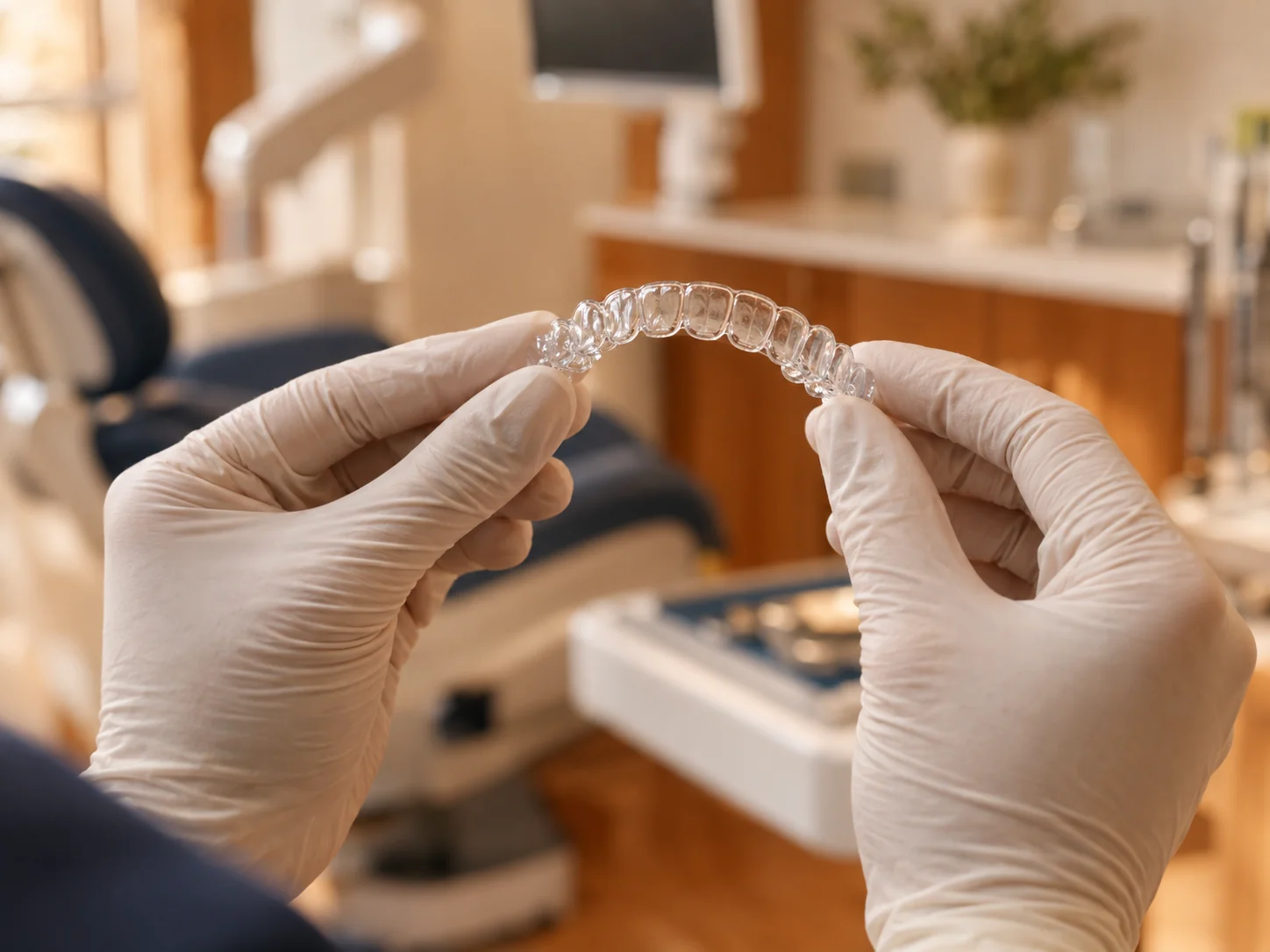
Braces are used for cases where teeth need to move in more than one direction, where the bite needs to be corrected, or where growth is being guided in younger patients. For milder corrections without visible brackets, some patients prefer Invisalign® clear aligners instead — the dentist reviews both options and recommends the one that suits your case.

When traditional braces are the right choice
Braces are often the preferred option when:
- Teeth are significantly crowded, rotated or overlapping and need controlled movement in multiple directions.
- The bite itself needs correction — for example a deep bite, an open bite, or a cross-bite.
- A younger patient is still growing and treatment can take advantage of that growth to guide the jaws.
- Compliance with a removable appliance would be difficult, and a fixed system makes results more predictable.
- A combination approach is planned, such as braces followed by veneers or restorations for a final smile design.
If clear aligners can achieve the goal comfortably and you’d rather avoid visible brackets, the dentist will say so honestly. The recommendation is always based on what the teeth need, not what the office prefers to place.
What to expect during braces treatment
- 1
Consultation and records
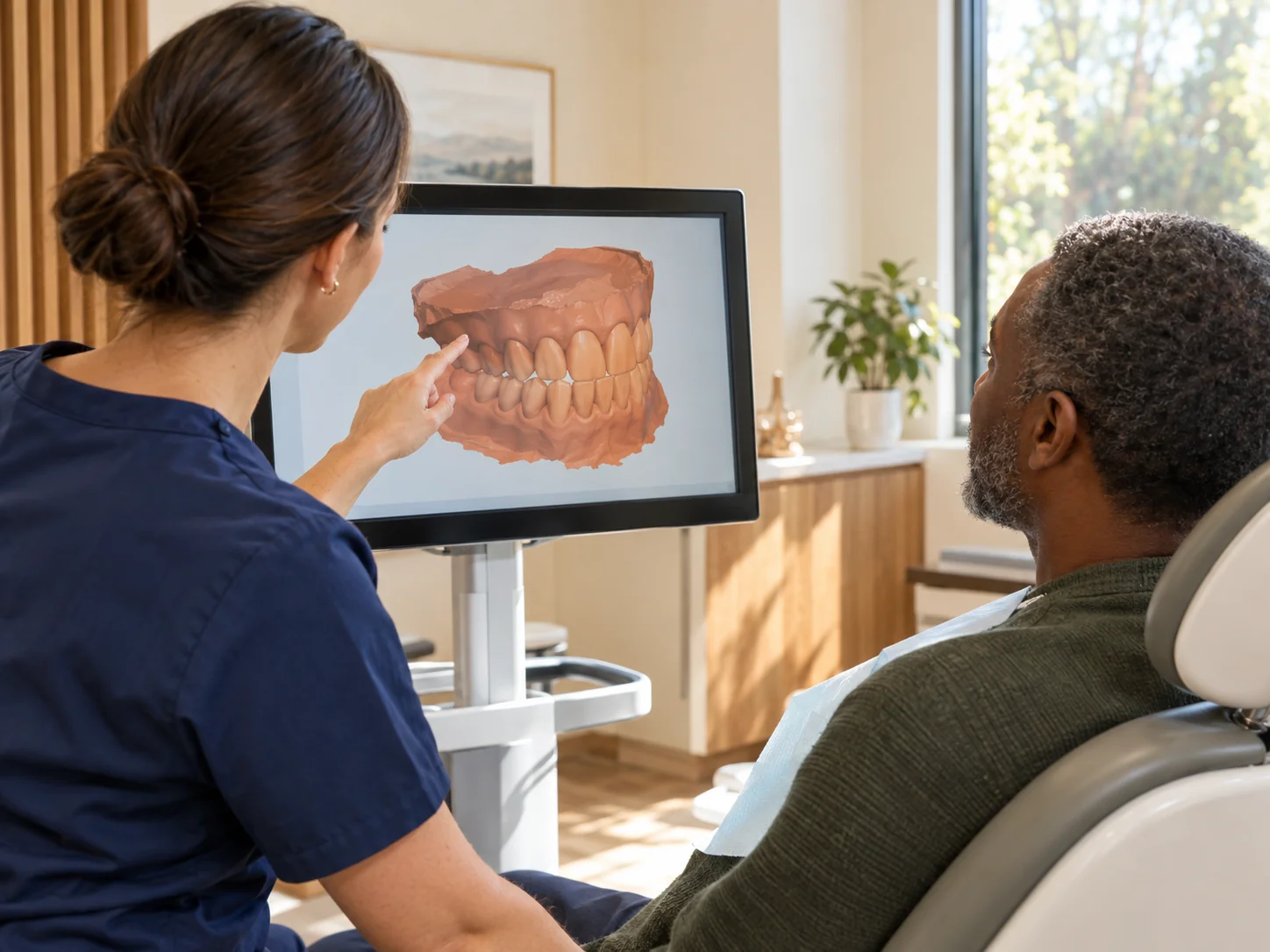
The dentist reviews your goals, examines your teeth, gums and bite, and takes a digital scan and any needed X-rays to plan the case.
- 2
Treatment plan
The dentist explains the projected tooth movements, the estimated length of treatment and the choice between metal and ceramic brackets, and provides a written cost estimate before you commit.
- 3
Bracket placement
At the placement visit the teeth are cleaned and dried, and each bracket is bonded to a specific position on the tooth. A first wire is placed and secured with small elastic ties or clips.
- 4
Regular adjustments
You return periodically so the dentist can change wires, add elastics if the bite needs help, and check progress. Most patients tolerate the first few days of a new wire with mild discomfort that softens quickly.
- 5
Home care
Special brushes and floss threaders help clean around brackets. The dentist and hygienist show you the technique at each visit and check your gum health carefully throughout treatment.
- 6
Removal and retainers
When the plan is complete, brackets are removed gently and the teeth are polished. Custom retainers are fitted to hold the result.
Anxious patients can discuss sedation options for the initial placement or removal appointment.
What happens after braces come off
Once the wires and brackets are removed, the teeth are polished and any small bonding remnants are cleaned away. A set of custom retainers is made and delivered — either clear removable retainers, a bonded wire behind the front teeth, or a combination. The dentist explains the wear schedule that suits your case and reviews it at recall visits.
Long-term retention is the single most important step in protecting the result. Teeth naturally tend to drift over the years if nothing holds them, so retainers are part of the plan indefinitely. Regular professional cleanings also help, since healthy gums and healthy bone are what let straightened teeth stay put.
Cost, insurance, and CDCP / IFHP coverage
The cost of braces depends on how complex the case is, how long treatment is expected to take and whether you choose metal or ceramic brackets. The dentist provides a written estimate at the consultation, and monthly payment plans through a third-party financing partner are available on approved credit for larger cases.
Many Canadian dental insurance plans include an orthodontic lifetime maximum that can be applied to braces. We submit predeterminations electronically so you know what your plan will pay before treatment starts. Lambton Dental is also a provider for the Canadian Dental Care Plan (CDCP) and the Interim Federal Health Program (IFHP); orthodontic coverage under these programs depends on your eligibility and the case.
Our payment options page explains billing openly.
For larger treatment plans, monthly payment plans through a third-party financing partner are available on approved credit — ask at your consultation or see our payment options.


Why patients choose Lambton Dental for braces
- Every case is planned and monitored by the dentist, with the projected outcome reviewed with you before treatment begins.
- Both metal and tooth-coloured ceramic brackets are available; the dentist explains the difference honestly.
- Digital scans replace putty impressions, so records are faster and more comfortable to take.
- We direct-bill CDCP, IFHP and major Canadian insurance carriers wherever your plan allows.
- Evening and weekend adjustment visits fit around work and school schedules.
- Our team serves patients in English, French, Italian, Spanish, Portuguese, Hindi, Punjabi, Urdu, Tagalog, Vietnamese, Ukrainian, Mandarin and Cantonese.
Related services
Frequently asked questions about braces
How long does braces treatment usually take?
It depends on how much the teeth need to move and how the bite responds. Simple cases can finish in about a year; more involved corrections often run eighteen to twenty-four months. The dentist gives you an estimated length at the consultation, before any brackets are placed, updates the estimate at each adjustment visit and lets you know promptly if the plan changes.
Are ceramic braces as effective as metal braces?
For most cases, yes. Ceramic brackets are tooth-coloured and blend in with the enamel more, and modern designs are as effective as metal for the great majority of tooth movements. In some heavier or shorter-timeline cases the dentist may recommend metal brackets; this is discussed openly at the consultation.
Do braces hurt?
Most patients notice tenderness for a day or two after placement and after each wire adjustment as the teeth begin to move. Soft foods and over-the-counter pain relief usually manage this well. Sharp poking from a wire end can happen occasionally; please call the office and we will fit you in for a comfort adjustment.
Can I play sports or a musical instrument with braces?
Yes. For contact sports, a custom mouthguard is strongly advised and can be made once brackets are placed. Wind and brass instruments take a short period of adjustment; most players return to their usual comfort level within a couple of weeks of playing regularly.
How do I keep my teeth clean with braces?
Special brushes, floss threaders and interdental picks reach the areas that a normal toothbrush cannot. The hygienist demonstrates the technique at your placement visit and re-checks it at each recall. Skipping cleanings during braces treatment risks decalcification marks around the brackets, so regular hygiene visits are important.
Do I still need retainers after braces?
Yes. Teeth naturally tend to drift back over the years if nothing holds them, so custom retainers are part of every braces plan. Wearing your retainers as directed is the single most important step in protecting the result long term after the brackets come off.
Are braces covered by dental insurance?
Many Canadian dental plans include an orthodontic lifetime maximum that can be applied to braces, and some plans cover part of the placement fee under basic services. We submit predeterminations before treatment so you know in advance what your plan will pay, and we can review CDCP and IFHP eligibility at the consultation.
Book a complimentary orthodontic consultation
Book online or call (416) 666-3700 to arrange a consultation. The dentist will assess your teeth and bite, discuss braces or clear aligner options and provide a written estimate before treatment begins.
CDCP welcome
We welcome patients covered under the Canadian Dental Care Plan and can help you understand what's covered.
Learn about CDCP →IFHP welcome
We are registered to treat patients under the Interim Federal Health Program and bill Medavie Blue Cross directly.
Learn about IFHP →Direct billing
We bill all major Canadian dental insurance carriers directly, so you pay only what your plan does not cover.
How direct billing works →