Complete dentures at Lambton Dental
Complete dentures replace a full arch of missing teeth with a custom-made removable prosthesis that rests on the gums. At Lambton Dental in West Toronto, complete dentures are planned by the dentist, made by a dental laboratory and adjusted over a series of visits so they look natural and let you eat and speak comfortably again.

What are complete dentures?
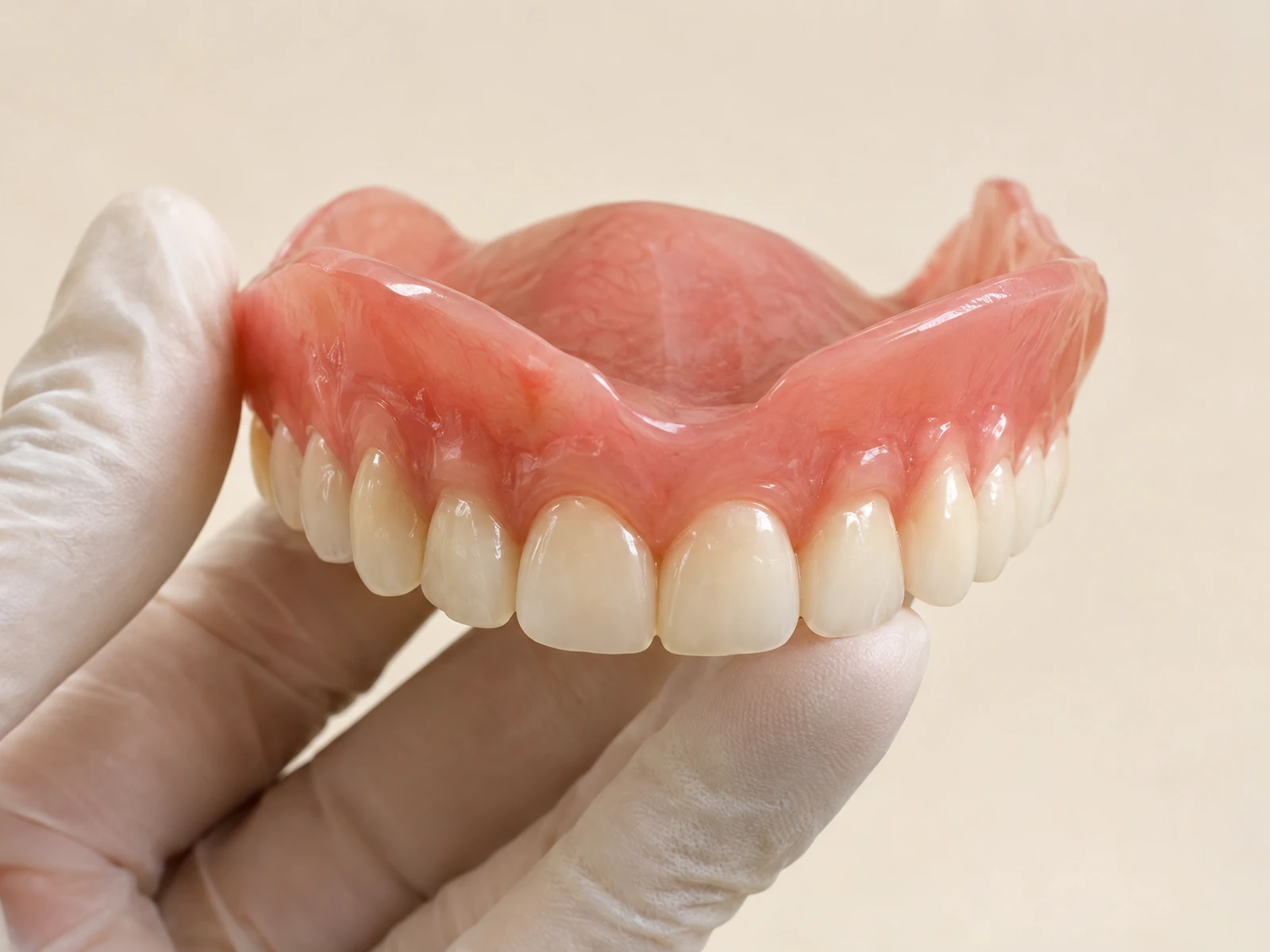
A complete denture, sometimes called a full denture, is a removable prosthesis that replaces every tooth in one arch — upper, lower, or both. The base is usually a pink acrylic that rests on the gum, holding a full set of denture teeth in the shape and shade planned by the dentist. Uppers stay in place mainly by suction against the palate; lowers rely more on the surrounding cheek and tongue muscles, and can also be stabilised with implants when suitable.
Complete dentures are made from a series of impressions and bite records so the fit and appearance are tailored to your face and mouth. They are removable at home for cleaning and, in most cases, are taken out overnight to let the gum tissues rest.

When complete dentures may be right for you
Complete dentures may be considered when:
- All the teeth in an arch are missing and have not been replaced.
- The remaining teeth in an arch are not restorable and need to be removed, and other options such as full-arch implants are not suitable for you.
- You have worn a denture for many years and it no longer fits or looks the way it should.
- An implant-supported option is planned but a conventional denture is needed in the meantime.
For patients who would like their lower denture to feel more stable, the dentist can discuss adding two or more implants to help hold it in place — see full-arch implant solutions. If some healthy teeth remain, a partial denture or a bridge may be a better fit; the dentist reviews all options honestly in a written plan.
What to expect when you get complete dentures at Lambton Dental
- 1
Consultation and planning
The dentist examines your gums, ridges and any remaining teeth, reviews X-rays and discusses the type of denture, timeline and options such as implant support if you are interested.
- 2
Extractions, if needed
Any remaining non-restorable teeth are removed. In some cases an immediate denture is placed the same day so you are not without teeth; in others we wait for the gums to heal before making the denture.
- 3
Impressions and bite records
A series of impressions captures the shape of your ridges, and bite records show how your upper and lower jaws relate. These go to the dental lab.
- 4
Try-in
A wax version of the denture is tried in so you and the dentist can check the tooth position, shade and how it looks with your lips and smile. Changes are made before the final denture is processed.
- 5
Fitting
The finished denture is seated, the fit and bite are checked, and you leave with clear guidance on wearing, eating and cleaning it.
- 6
Adjustment visits
Short follow-up visits over the first few weeks let the dentist ease any sore spots and refine the bite as your mouth adapts.
Nitrous oxide, oral sedation and IV sedation are available for anxious patients; the dentist reviews your health history first. See our sedation options page for more.
Living with your new complete dentures
Getting used to a new denture takes practice, and the first few weeks are usually the most demanding. Most patients find it helps to start with soft foods cut into small pieces, chew on both sides at once and practise reading aloud so speech settles in. Small sore spots are common at first and are easy to ease at a short adjustment visit rather than by living with the discomfort.
Dentures are cleaned outside the mouth over a folded towel or a basin of water so they are not damaged if dropped. Rinse after meals, brush the denture daily with a soft brush and denture cleaner rather than regular toothpaste, and soak it overnight in water or a cleaning solution recommended by the dentist. Bring your denture to your recall visits so the dentist can check fit, gum health and whether a reline or new denture will be needed in time. Ridge shape changes gradually after teeth are lost, so adjustments become part of care.

Cost, insurance, and CDCP / IFHP coverage
The cost of a complete denture depends on whether one or both arches are being made, the type of denture materials chosen and whether an immediate denture or an implant-supported option is planned. The dentist provides a written estimate before treatment begins, and financing is available for treatment plans that need it.
We accept all major Canadian dental insurance carriers and direct-bill wherever your plan allows. Most plans cover complete dentures under major or prosthodontic services and often have a replacement frequency limit — commonly every five years — that we check before treatment. Where useful, we submit a pre-determination to your carrier. Lambton Dental is also a provider for the Canadian Dental Care Plan (CDCP) and the Interim Federal Health Program (IFHP); coverage for dentures under these programs depends on your eligibility and the services provided, and we will confirm what applies before your appointment.
For patients without insurance, our payment options page explains billing openly.
For larger treatment plans, monthly payment plans through a third-party financing partner are available on approved credit — ask at your consultation or see our payment options.


Why patients choose Lambton Dental for complete dentures
- The dentist plans and fits each denture, takes time to explain your options and provides adjustment visits as part of the process.
- Dentures are made by a dental laboratory using impressions and bite records tailored to your mouth, with a wax try-in before the final denture is processed.
- Comfort is a priority: topical numbing, gentle freezing for any extractions and, for anxious patients, sedation options are available after a health review.
- We direct-bill CDCP, IFHP and major insurance carriers wherever your plan allows, and we submit pre-determinations for major work.
- Evening and weekend appointments make it easier to fit the series of short visits around your schedule.
- Our team serves patients in English, French, Italian, Spanish, Portuguese, Hindi, Punjabi, Urdu, Tagalog, Vietnamese, Ukrainian, Mandarin and Cantonese.
Related services
Frequently asked questions about complete dentures
How long does it take to get complete dentures?
A conventional denture is usually made over several visits across a few weeks, once any healing from extractions is complete. An immediate denture is delivered the day teeth are removed, so you are not without teeth, but it needs a reline as the gums heal. The dentist gives you an expected timeline at the consultation.
Will my new dentures feel natural right away?
Most patients need a few weeks to adjust. Speech can feel a little different at first, eating starts with soft foods and small bites, and small sore spots are common as the denture settles. Follow-up visits are used to ease pressure points and refine the bite. Comfort typically improves steadily, and problems that persist should be reported so they can be addressed.
Can complete dentures be made more stable?
Yes. In many patients, two or more dental implants in the lower jaw can hold the denture in place with clips or a bar, which greatly improves stability during chewing and speaking. Upper implant-retained options are also possible. The dentist will let you know whether you are a candidate at your consultation.
How do I care for my dentures at home?
Rinse after meals, brush the denture daily over a folded towel or basin of water with a soft denture brush and denture cleaner rather than regular toothpaste, and soak it overnight in water or a recommended cleaning solution. Brush your gums, tongue and palate morning and night to keep the tissues healthy, and never use hot water, which can warp the denture.
Should I sleep with my dentures in?
In most cases the dentist recommends taking them out at night to let the gum tissues rest and to keep the tissues healthy. There are situations, especially in the first few days after an immediate denture, when the dentist may ask you to wear it longer for support. Follow the guidance given for your specific case.
How often will my dentures need to be replaced?
Dentures do not last forever. Bone and gum shape change gradually after teeth are lost, so a reline or new denture is often needed every several years to keep the fit and bite comfortable. The dentist checks the fit at each recall visit and lets you know when a reline or replacement is worth considering.
Can I eat normally with complete dentures?
Most patients can enjoy a wide range of foods with practice, though very hard, sticky or crunchy items can be harder to manage. Cutting food into small pieces and chewing on both sides at once helps. Implant-supported options generally allow a wider range of foods with less movement of the denture.
Book a denture consultation
Book online or call (416) 666-3700 to arrange a consultation. The dentist will examine your mouth, review your options — including implant-supported alternatives if you are interested — and provide a written estimate before any treatment is booked.
CDCP welcome
We welcome patients covered under the Canadian Dental Care Plan and can help you understand what's covered.
Learn about CDCP →IFHP welcome
We are registered to treat patients under the Interim Federal Health Program and bill Medavie Blue Cross directly.
Learn about IFHP →Direct billing
We bill all major Canadian dental insurance carriers directly, so you pay only what your plan does not cover.
How direct billing works →