Gum contouring at Lambton Dental
Gum contouring reshapes the gum line so teeth look more even in length and the smile line is balanced. At Lambton Dental in West Toronto every contouring case is planned with photos and a written quote so you can preview the result before treatment.

What gum contouring is
Gum contouring, also called a cosmetic gingivectomy, is a treatment that reshapes the gum line to make teeth look more even in length or to reduce how much gum shows when you smile. A small amount of gum tissue is carefully removed or repositioned so the outline around each tooth matches the neighbouring teeth.
Some cases are straightforward and can be done in the practice under local anaesthetic. Others involve underlying bone and are planned in stages, sometimes with a referral for part of the treatment. The dentist will explain which category your case falls into before any work is booked.

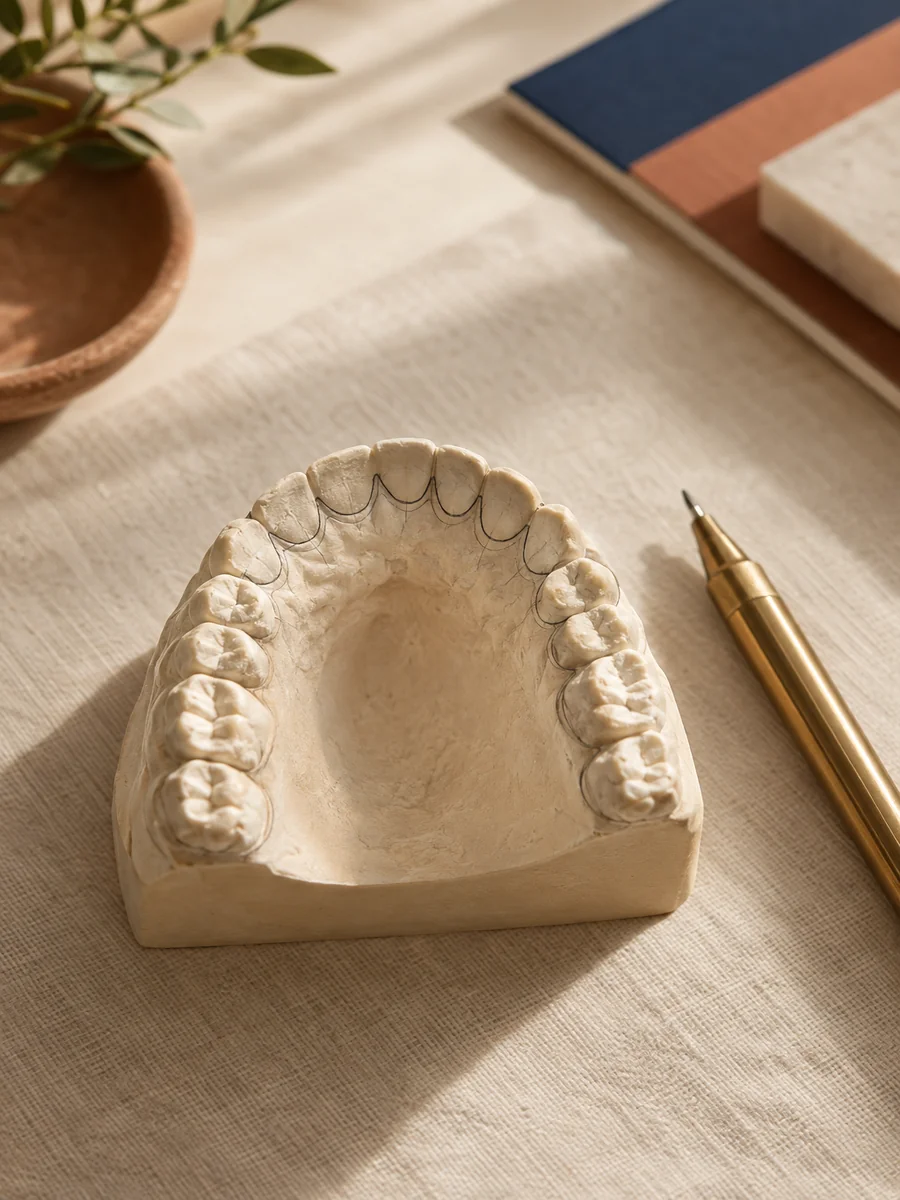
When gum contouring is the right option
Gum contouring may be a good option when:
- The gum line around one or two teeth sits noticeably lower than the neighbouring teeth, making those teeth look shorter.
- You feel your smile shows more gum than you would like, and a small reshape would balance it.
- You are planning veneers, cosmetic bonding or a smile makeover, and small gum adjustments would let the restorations sit in the ideal position.
- Gum tissue has overgrown a tooth or restoration and cleaning around the margin has become difficult.
If underlying bone level or active gum disease is the main reason the gum line looks uneven, we treat those first with periodontal care before any cosmetic reshaping. The dentist will provide a written plan showing whether contouring is enough or whether additional treatment is needed for a stable result.
What to expect at a contouring visit
- 1
Exam and photographs
The dentist reviews your smile with you, takes photographs and, where useful, marks the proposed new gum line so you can preview the change.
- 2
Written plan and quote
A short written plan explains how many teeth are involved, whether the treatment is straightforward or staged, and provides an estimate before anything begins.
- 3
Numbing and reshaping
On the treatment day, the area is gently numbed and small amounts of gum tissue are carefully removed or repositioned along the new outline. Depending on the case, this may be done with a scalpel technique, an electrosurgical unit or a soft-tissue laser — the dentist will discuss which is appropriate for your gum type.
- 4
Contour check
The dentist checks the new outline in a mirror with you before the appointment ends and adjusts any area that needs a small refinement.
- 5
Follow-up review
A short review visit a couple of weeks later checks how the gum tissue has healed and how the final contour looks against the teeth.
Nitrous oxide, oral sedation and IV sedation are available for anxious patients; the dentist reviews your health history first. See our sedation options page for more.
Healing and long-term care
Mild tenderness at the treated areas is common for a few days and usually settles with over-the-counter pain relief and warm salt-water rinses. We give you clear written aftercare with what to eat, what to avoid and when to contact us if anything feels off. Most patients return to normal activities the same day and to normal eating within a few days.
Because the new gum outline is the foundation for how your smile looks, keeping the gums healthy long-term is important. That means daily brushing and flossing along the new margins, regular professional cleanings and, for anyone with gum-disease history, ongoing periodontal maintenance. Gums that stay healthy tend to hold the new contour well; gums with untreated inflammation can shift.

Cost, insurance, and CDCP / IFHP coverage
The cost of gum contouring depends on how many teeth are involved and whether the case is a simple reshape or a staged plan that also addresses bone. A written estimate is provided after the exam and photographs.
Purely cosmetic gum contouring is generally not covered by private insurance, the Canadian Dental Care Plan (CDCP) or the Interim Federal Health Program (IFHP). Where the same treatment is done for a health reason (for example, removing overgrown gum tissue that traps plaque) part of the fee may be considered a periodontal or minor surgical code — we check the details and direct-bill what your plan allows. Our payment options page explains billing openly for out-of-pocket cases.
For anyone combining gum contouring with other cosmetic work — for example, veneers or a smile makeover — we sequence the contouring first where it improves the position for the restorations, and lay out the phased cost in writing.
For larger treatment plans, monthly payment plans through a third-party financing partner are available on approved credit — ask at your consultation or see our payment options.


Why patients choose Lambton Dental for gum contouring
- Every contouring case starts with photographs and, where useful, a marked preview of the new gum line so you can approve the change before treatment.
- We are honest about when a simple reshape is enough and when the case needs to be staged with periodontal or restorative treatment for a stable, healthy result.
- Comfort is a priority: gentle freezing, careful technique and sedation options are available after a health review.
- Written quotes are provided before treatment, and any related cleaning or gum-health work is discussed separately.
- We direct-bill CDCP, IFHP and major insurance carriers wherever any part of the treatment qualifies.
- Our team serves patients in English, French, Italian, Spanish, Portuguese, Hindi, Punjabi, Urdu, Tagalog, Vietnamese, Ukrainian, Mandarin and Cantonese.
Related services
Frequently asked questions about gum contouring
Is gum contouring uncomfortable?
The area is numbed before any tissue is reshaped, so most patients feel gentle pressure rather than sharp sensation during the treatment. Mild tenderness for a few days afterwards is common and settles with over-the-counter pain relief and warm salt-water rinses. Most patients return to normal eating within a few days, and we schedule a short follow-up so healing is checked and any final adjustment can be made.
How long does the result last?
When the gums stay healthy and inflammation is controlled, the new contour typically holds for many years. Gums with untreated periodontal issues can shift over time, so we recommend the same daily care and recall cleanings you would follow anyway. Where any part of the contour has settled slightly, a small in-chair refinement at a review visit usually restores the shape without another full treatment.
Will my teeth look longer after contouring?
That is often the point of the treatment — when a gum line sits low over a tooth, the tooth looks short; reshaping the gum reveals more of the natural crown so the tooth looks proportionate to its neighbours. We plan the new gum line with your natural smile in mind so the treated teeth look proportionate to the ones that stay untouched.
Is contouring done with a laser?
Depending on the case, the dentist may use a soft-tissue laser, an electrosurgical unit or a fine scalpel. Each has its place — the choice depends on how much tissue is being removed, your gum type and how bleeding and healing are managed most predictably. We explain the plan at the exam. We discuss which technique fits your gum type at the exam so you know what to expect on the day, and comfort options are reviewed as part of the health check.
Can you always fix a gummy smile with contouring?
Not always. Some gummy smiles are caused by the position of the upper lip or by underlying bone, and those cases may need a different treatment or a staged plan. We are candid at the exam about what contouring alone can and cannot achieve.
Book a gum contouring consultation
Book online or call (416) 666-3700 to arrange a short consultation. The dentist will review your smile, take photographs and provide a written estimate before any treatment is booked.
CDCP welcome
We welcome patients covered under the Canadian Dental Care Plan and can help you understand what's covered.
Learn about CDCP →IFHP welcome
We are registered to treat patients under the Interim Federal Health Program and bill Medavie Blue Cross directly.
Learn about IFHP →Direct billing
We bill all major Canadian dental insurance carriers directly, so you pay only what your plan does not cover.
How direct billing works →