Composite tooth-coloured fillings at Lambton Dental
When a tooth develops a cavity or a small chip, a composite filling restores its shape and strength using a tooth-coloured resin that is bonded directly to the tooth. At Lambton Dental in West Toronto we place metal-free composite fillings that are shade-matched to the surrounding enamel, so the repair blends in and feels like part of the tooth.

What is a composite filling?
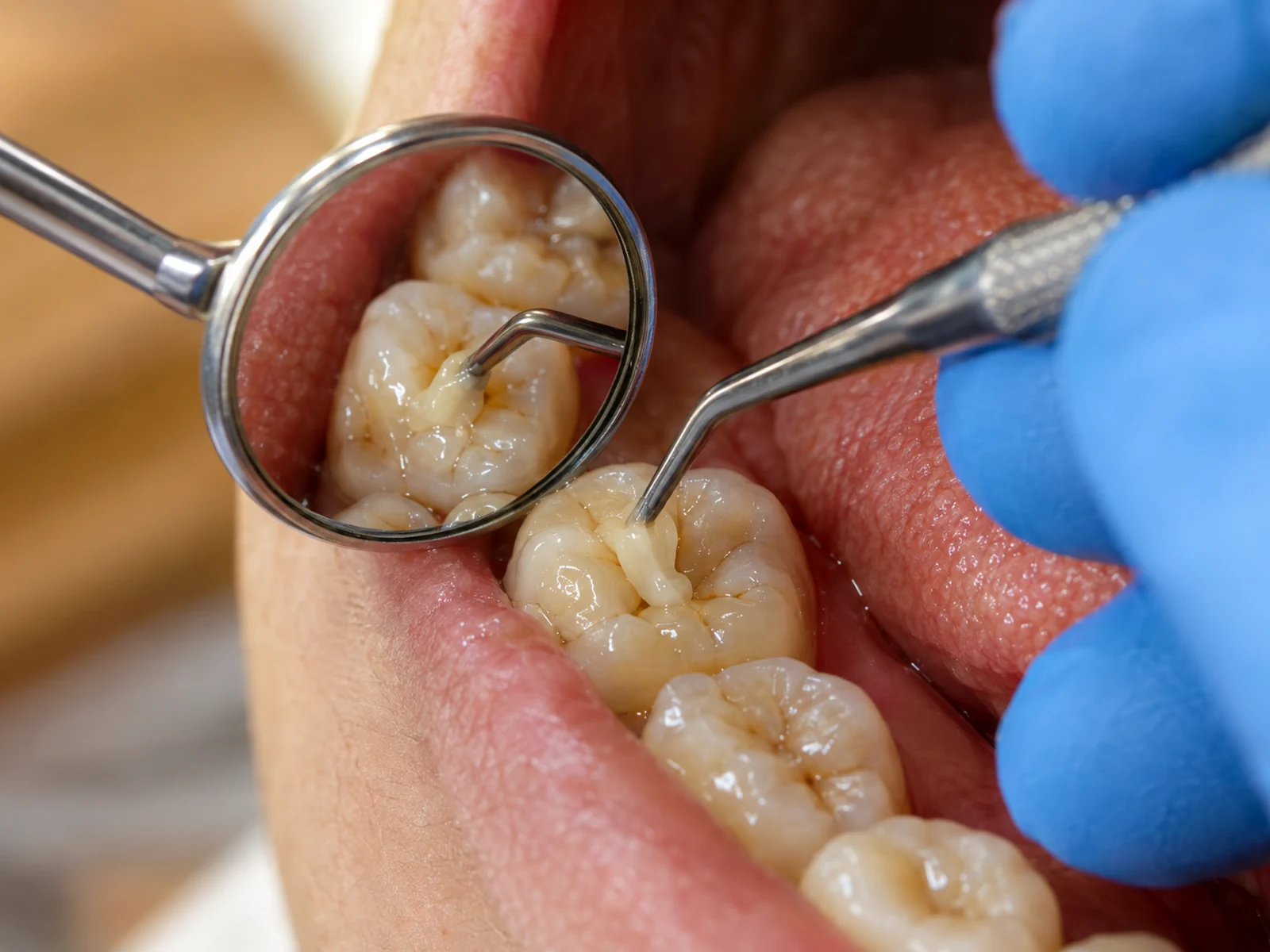
A composite filling is a repair made from a durable, tooth-coloured resin that is layered into a prepared cavity and hardened with a curing light. Because the material bonds directly to the enamel and dentin, less healthy tooth structure needs to be removed than with older filling styles, and the result looks natural rather than silver or grey.
Composites are used for cavities of small to moderate size, to rebuild chipped corners, to replace old fillings that have worn or leaked, and to close small gaps between front teeth where a full veneer is not needed. When a cavity is very large, or when a cracked tooth needs full coverage, the dentist may recommend a dental crown instead and will explain why before anything proceeds.

When a composite filling is the right choice
A tooth-coloured filling is usually a good option when:
- A small or moderate cavity was found during a comprehensive exam or digital X-ray.
- A tooth has a chipped edge, a worn biting surface or a small fracture that has not reached the nerve.
- An older silver amalgam or composite filling is leaking, stained or breaking down and needs to be replaced.
- You would like a repair that matches the colour of your natural teeth rather than a metallic material.
- A front tooth has a small gap or minor shape irregularity that can be improved without a veneer.
If decay has reached the nerve of the tooth, the dentist may discuss root canal therapy and a crown. If the tooth is too damaged to hold a filling, options such as a crown, a bridge or an implant are reviewed with you in a written plan before anything is booked.
What to expect when you have a composite filling placed
- 1
Diagnosis and discussion
The dentist confirms the cavity or damage with an exam and, where useful, a digital X-ray, and talks through what the filling will involve and how much of the tooth is affected.
- 2
Comfort and freezing
The area is numbed with local anaesthetic so the tooth and surrounding gum are comfortable throughout. Tell us if you would like a topical gel first or a slower pace.
- 3
Removing decay and shaping the tooth
Using a small handpiece, the dentist gently removes the decayed portion and shapes the space so the filling will bond well and hold up under chewing.
- 4
Bonding and layering
The tooth is cleaned and treated with a bonding agent, and the tooth-coloured composite is placed in thin layers. Each layer is hardened with a curing light before the next is added.
- 5
Shaping and polishing
Once the filling is built up, the dentist trims and contours it to match the natural anatomy of the tooth, checks your bite with articulating paper and polishes the surface so it feels smooth.
- 6
Aftercare guidance
You leave with clear instructions about eating, sensitivity and what to watch for, and a follow-up plan if any adjustments are needed.
Nitrous oxide, oral sedation and IV sedation are available for anxious patients; the dentist reviews your health history first. See our sedation options page for more.
What happens after your filling
The freezing usually wears off over a couple of hours, and it is sensible to avoid chewing on that side until sensation returns so you do not accidentally bite your cheek or tongue. It is normal for the tooth to feel a little sensitive to cold or pressure for a few days as the nerve settles, and this typically fades on its own. If your bite feels high or uneven once the freezing wears off, please book a quick visit so the dentist can adjust it.
A well-cared-for composite filling can last for years. How long depends on the size of the filling, where it sits in your mouth, how heavily you chew or grind, and your day-to-day home care. Keeping up with brushing, flossing and regular professional cleanings gives the surrounding tooth the greatest chance of staying healthy, and the dentist checks all your fillings at each recall visit so any wear or leakage can be caught early.

Cost, insurance, and CDCP / IFHP coverage
The cost of a composite filling depends on how many surfaces of the tooth are involved and where the tooth sits in your mouth. The dentist gives you a written estimate before the filling is placed so you can decide with the full picture in front of you, and financing is available for treatment plans that need it.
We accept all major Canadian dental insurance carriers and direct-bill wherever your plan allows, so you pay only your portion at the visit. Most plans cover composite fillings under basic services, though some older plans reimburse only at the amalgam rate and cover the difference to composite as a patient portion; we confirm what applies before treatment. Lambton Dental is also a provider for the Canadian Dental Care Plan (CDCP) and the Interim Federal Health Program (IFHP); coverage under these programs depends on your eligibility and the services provided, and we will confirm what applies to you before your appointment.
For patients without insurance, our payment options page explains billing openly.
For larger treatment plans, monthly payment plans through a third-party financing partner are available on approved credit — ask at your consultation or see our payment options.


Why patients choose Lambton Dental for composite fillings
- Every filling is placed by the dentist, shade-matched to the surrounding tooth and finished so your bite feels natural.
- We take time to explain what we found on the exam or X-ray before recommending a filling, so nothing is done without you understanding why.
- Comfort is a priority: topical numbing, gentle freezing and, for anxious patients, sedation options are available after the dentist reviews your health history.
- We direct-bill CDCP, IFHP and major insurance carriers wherever your plan allows.
- Evening and weekend appointments make it easier to fit treatment around your work or family schedule.
- Our team serves patients in English, French, Italian, Spanish, Portuguese, Hindi, Punjabi, Urdu, Tagalog, Vietnamese, Ukrainian, Mandarin and Cantonese.
Related services
Frequently asked questions about composite fillings
How long does a composite filling last?
Longevity varies from patient to patient. Small to moderate composite fillings often last many years when the surrounding tooth stays healthy and the patient keeps up with regular cleanings and exams. Large fillings on back teeth or fillings in patients who grind heavily tend to wear or chip sooner, and the dentist may suggest a crown for teeth under heavy load.
Are composite fillings safer than silver amalgam?
Both materials have been used in dentistry for decades and are considered acceptable by Canadian dental regulators. Composite is chosen at Lambton Dental primarily because it is tooth-coloured, bonds directly to enamel and dentin, and often requires removing less healthy tooth structure. The dentist can discuss the trade-offs with you if you would like.
Will my filling hurt?
The area is numbed with local anaesthetic before any drilling, so the appointment itself is comfortable for most patients. Some people notice sensitivity to cold, pressure or sweets for a few days afterwards as the nerve settles; this usually fades. Persistent pain or a bite that feels high should be reported so the dentist can adjust the filling.
Can I eat and drink normally after a composite filling?
Composite hardens fully during the appointment, so you can eat as soon as the freezing wears off. It is sensible to wait until sensation returns so you do not bite your cheek or tongue, and to be gentle on the newly filled tooth for the first day. Avoiding very hard foods on that side for a short while helps the tooth settle in.
Do composite fillings stain over time?
Composites are more stain-resistant than they used to be, but heavy coffee, tea, red wine or tobacco use can gradually discolour the surface, especially on front teeth. Regular cleanings help, and the dentist can polish or, if needed, replace a stained filling. Whitening does not lighten composite the way it lightens natural enamel.
Can old silver fillings be replaced with composite?
Yes, and this is often done when an older filling is cracked, leaking or breaking down. Replacement is not automatic for a filling that is still sealing well, since replacing it always removes a little more tooth structure. The dentist will examine the filling and let you know honestly whether replacement is worthwhile in your case.
Is a filling still an option if the cavity is very deep?
Not always. If decay has reached the nerve, root canal therapy and a crown may be needed. If a large amount of the tooth is missing, a crown may hold up better than a large filling. The dentist reviews the X-ray with you, explains what a filling can and cannot do in your case, and provides a written treatment plan before proceeding.
Book a filling assessment
Book online or call (416) 666-3700 to arrange an assessment. The dentist will examine the tooth, confirm whether a composite filling is the right option and provide a written estimate before any treatment is booked.
CDCP welcome
We welcome patients covered under the Canadian Dental Care Plan and can help you understand what's covered.
Learn about CDCP →IFHP welcome
We are registered to treat patients under the Interim Federal Health Program and bill Medavie Blue Cross directly.
Learn about IFHP →Direct billing
We bill all major Canadian dental insurance carriers directly, so you pay only what your plan does not cover.
How direct billing works →