Dental bridges at Lambton Dental
A dental bridge fills the gap left by a missing tooth using a lab-made restoration that anchors to the teeth on either side, or to dental implants. At Lambton Dental in West Toronto, bridges are planned and fitted so they look like part of your smile and let you chew comfortably again.

What is a dental bridge?
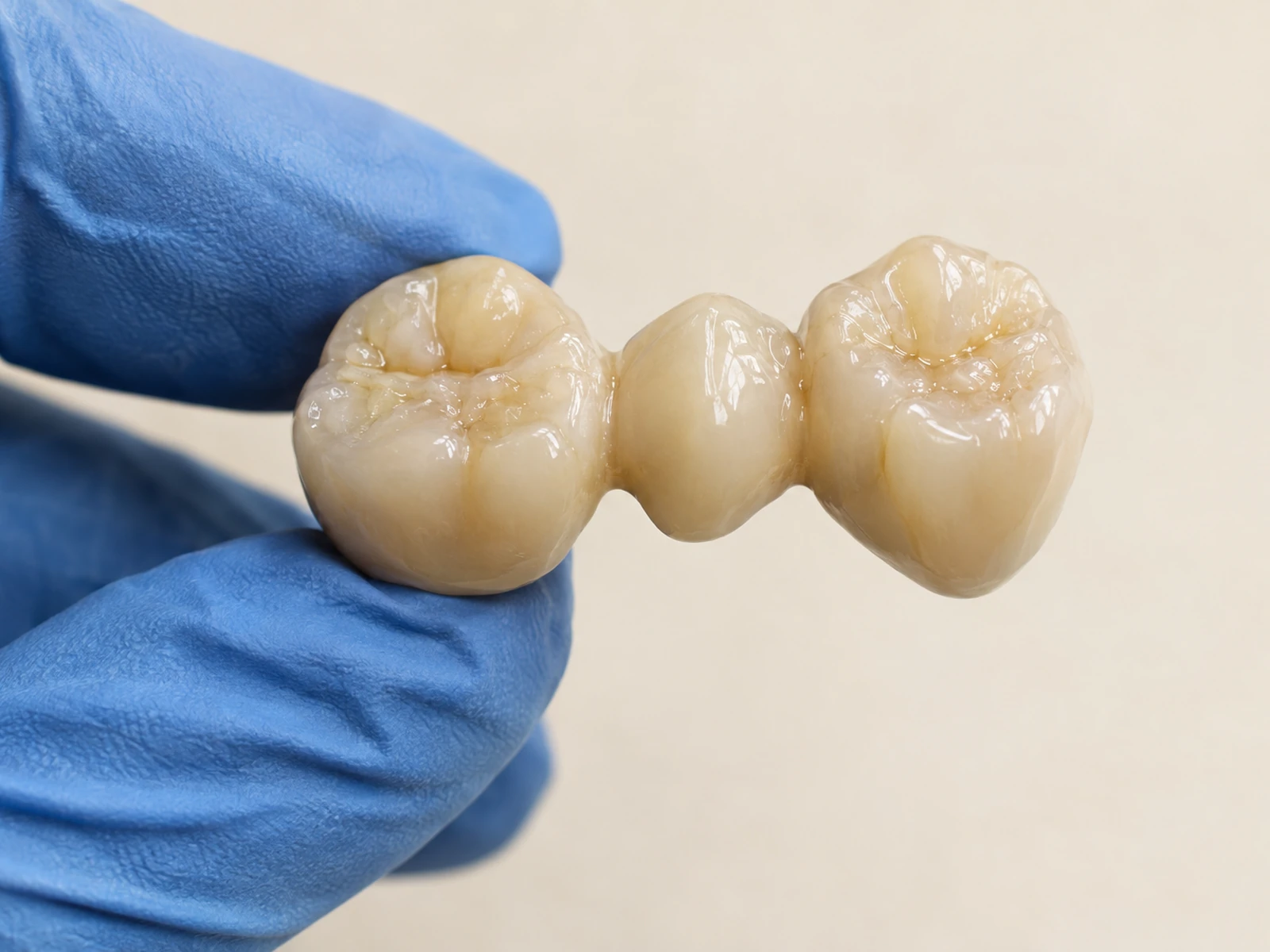
A bridge is a fixed restoration that replaces one or more missing teeth. It is made up of one or more replacement teeth, called pontics, supported by crowns that are cemented onto the natural teeth beside the gap, or onto dental implants. Once in place, a bridge cannot be taken out at home, and it is cared for much like your natural teeth with the addition of cleaning under the pontic.
Bridges are used when there are healthy teeth on either side of a gap that can support the restoration, or when implants are planned to act as the supports. The dentist chooses the material — commonly porcelain-fused-to-metal or zirconia — based on where the bridge sits in the mouth, how much bite force it will take, and how visible it is when you smile.

When a bridge is the right choice
A dental bridge may be a good option when:
- One or more teeth are missing in a row and the teeth on either side of the gap are healthy enough to support crowns.
- You would like a fixed replacement that stays in the mouth rather than a removable option such as a partial denture.
- You are not a candidate for implants for medical, anatomical or financial reasons and want a fixed option that can be completed more quickly than implant treatment.
- You have dental implants planned as the supports for a longer-span replacement.
If the neighbouring teeth are already heavily filled or need crowns for other reasons, a bridge may be an efficient choice. If they are perfectly healthy, an implant-supported crown may preserve more tooth structure. The dentist will discuss the trade-offs and provide a written plan before anything proceeds.
What to expect when you get a bridge at Lambton Dental
- 1
Consultation and planning
The dentist examines the gap, checks the supporting teeth or plans the implants, reviews X-rays and discusses material choices and expected outcomes with you.
- 2
First visit — preparation
The supporting teeth are numbed with local anaesthetic and shaped to receive crowns. If implants are being used as supports, they must be placed and healed before this step.
- 3
Impression or digital scan
An accurate record of the prepared teeth, the gap and your bite is sent to the dental lab, where the bridge is custom-made in the chosen material and shade.
- 4
Temporary bridge
A temporary is placed to protect the prepared teeth, cover the gap and let you eat and speak comfortably between visits.
- 5
Second visit — fitting
The temporary is removed, the new bridge is tried in, and the dentist checks the fit, shade and bite. Small adjustments are made before the bridge is cemented in place.
- 6
Follow-up
Your bite is rechecked at the next recall visit, and the bridge is inspected at every hygiene appointment thereafter.
Nitrous oxide, oral sedation and IV sedation are available for anxious patients; the dentist reviews your health history first. See our sedation options page for more.
Living with your new bridge
Some tenderness in the gum around the supporting teeth is normal for a day or two after fitting, and mild cold sensitivity can last a little longer. Once you settle in, most patients find that chewing feels natural again and that speech, which can feel unfamiliar for a few days with a large front bridge, quickly returns to normal.
Because a bridge is one piece across several teeth, ordinary flossing does not reach underneath the pontic. The hygienist will show you how to use a floss threader, super floss or an interdental brush to clean under the replacement tooth so the gum stays healthy and decay does not start at the crown margins. Keeping up with regular professional cleanings and exams gives the bridge the greatest chance of a long service life, and if you grind, a custom night guard may be recommended to protect it.

Cost, insurance, and CDCP / IFHP coverage
The cost of a bridge depends on how many teeth are being replaced, the material chosen and whether natural teeth or implants act as the supports. The dentist provides a written estimate before any tooth is prepared, and financing is available for treatment plans that need it.
We accept all major Canadian dental insurance carriers and direct-bill wherever your plan allows. Most plans cover bridges under major services, often at a set percentage after a deductible, and many have an annual maximum that affects timing. Where useful, we submit a pre-determination to your carrier so you know your out-of-pocket portion before treatment starts. Lambton Dental is also a provider for the Canadian Dental Care Plan (CDCP) and the Interim Federal Health Program (IFHP); coverage depends on your eligibility and the services provided, and we will confirm what applies before your appointment.
For patients without insurance, our payment options page explains billing openly.
For larger treatment plans, monthly payment plans through a third-party financing partner are available on approved credit — ask at your consultation or see our payment options.

Why patients choose Lambton Dental for bridges
- The dentist reviews implant, bridge and partial-denture options honestly so you can weigh the trade-offs for your mouth and budget.
- Bridges are made by a dental laboratory using accurate impressions or digital scans and adjusted at the fitting for a comfortable bite.
- Comfort is a priority: topical numbing, gentle freezing and, for anxious patients, sedation options are available after a health review.
- We direct-bill CDCP, IFHP and major insurance carriers wherever your plan allows, and we submit pre-determinations for major work.
- Evening and weekend appointments make it easier to fit the two short visits around work and family.
- Our team serves patients in English, French, Italian, Spanish, Portuguese, Hindi, Punjabi, Urdu, Tagalog, Vietnamese, Ukrainian, Mandarin and Cantonese.
Related services
Frequently asked questions about dental bridges
How long does a bridge last?
Longevity varies from patient to patient. Many bridges last well over a decade when the supporting teeth or implants stay healthy and the patient keeps up with regular cleanings, exams and careful home care under the pontic. Grinding, decay at the crown margins and gum problems around the supports are the most common reasons a bridge eventually needs replacing.
Bridge or implant: which is better?
It depends on the case. An implant replaces a single missing tooth without touching the neighbours and can be a good option if the surrounding teeth are perfectly healthy. A bridge may be a strong choice when the neighbouring teeth already need crowns, when implants are not suitable, or when a faster timeline is important. The dentist reviews both with you.
Does getting a bridge hurt?
The supporting teeth are numbed with local anaesthetic before they are shaped, so the appointment itself is comfortable for most patients. Some tenderness in the gum for a day or two afterwards is normal, and mild cold sensitivity can last a little longer while the teeth settle. Persistent pain or a bite that feels high should be reported so the dentist can check it.
How do I clean under a bridge?
Ordinary floss does not reach under the pontic because the bridge is one piece. The hygienist will show you how to use a floss threader, super floss or an interdental brush to clean beneath the replacement tooth. Consistent cleaning under the pontic and along the crown margins helps prevent gum inflammation and decay of the supporting teeth.
Can a bridge be placed the same day a tooth is removed?
Usually not. The gum and bone need time to heal and settle after an extraction before a final bridge is made, so a temporary is often worn during that period. In some cases a temporary bridge can be placed sooner. The dentist reviews the timeline with you as part of the treatment plan.
What if a supporting tooth develops a problem later?
If a supporting tooth develops decay, gum disease or a fracture, the bridge may need to be adjusted, remade or replaced with a different solution such as an implant. That is one of the reasons the dentist inspects the bridge and its supports at every recall visit and treats small problems early.
Can I use CDCP or IFHP for a bridge?
Coverage under the Canadian Dental Care Plan and the Interim Federal Health Program depends on your eligibility and the specific procedure codes. Bridge coverage depends on your plan year, and some services can have a co-payment. We confirm what applies to you before treatment begins and submit a pre-determination where it helps.
Book a bridge consultation
Book online or call (416) 666-3700 to arrange a consultation. The dentist will examine the gap, review your options for replacing missing teeth and provide a written estimate before any treatment is booked.
CDCP welcome
We welcome patients covered under the Canadian Dental Care Plan and can help you understand what's covered.
Learn about CDCP →IFHP welcome
We are registered to treat patients under the Interim Federal Health Program and bill Medavie Blue Cross directly.
Learn about IFHP →Direct billing
We bill all major Canadian dental insurance carriers directly, so you pay only what your plan does not cover.
How direct billing works →