Dental crowns at Lambton Dental
A dental crown is a tooth-shaped cap that fits over a tooth to restore its shape, strength and appearance when a filling is no longer enough. At Lambton Dental in West Toronto, crowns are planned by the dentist, made by a dental laboratory and fitted so the restored tooth blends in and functions naturally when you eat and smile.

What is a dental crown?
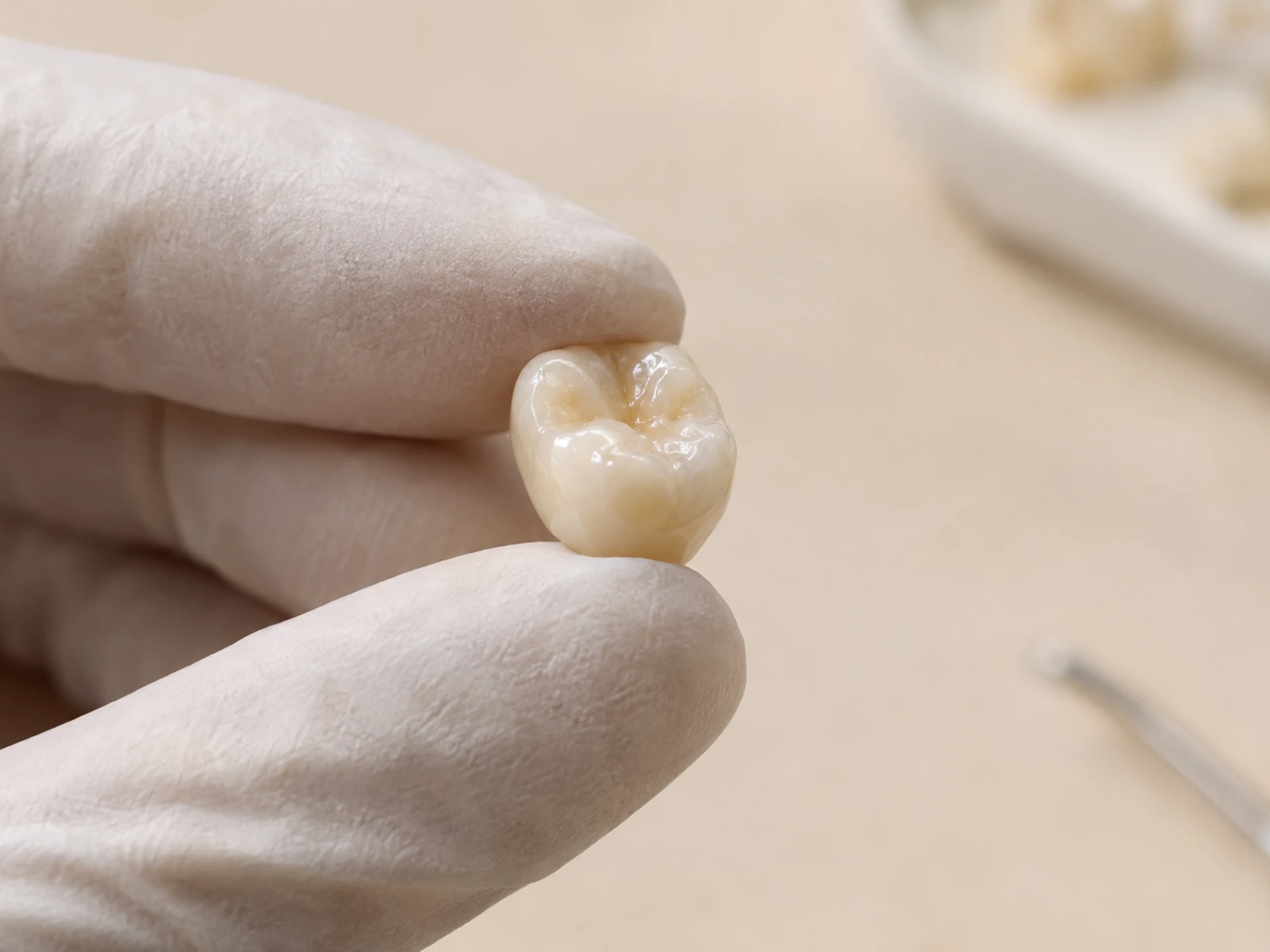
A crown is a custom-made covering that surrounds the visible part of a tooth above the gumline. It is bonded or cemented in place and, once fitted, functions like a natural tooth for biting and chewing. Crowns are used when a tooth has too little healthy structure left to hold a filling, when a cracked tooth needs full coverage to prevent it from splitting further, or when a tooth has had a root canal and needs long-term protection.
The dentist chooses the crown material based on where the tooth sits in your mouth, how much force it takes, and how important appearance is at that position. Common choices include full-porcelain and zirconia for a natural look on visible teeth, and porcelain-fused-to-metal or full-metal crowns for molars where strength is the priority. The trade-offs are explained before you decide.

When a crown is the right choice
A crown may be recommended when:
- A tooth is cracked, broken or worn down and no longer supports a filling.
- A large old filling is failing and there is not enough sound tooth left to place another one.
- A tooth has had root canal therapy and needs full coverage so it does not fracture under chewing.
- A tooth is misshapen or discoloured in a way that a simpler repair cannot address, and the dentist has discussed cosmetic options with you.
- A crown is needed to support a dental bridge or to complete a single-tooth implant.
If a tooth can be reliably restored with a composite filling, the dentist will say so rather than recommend a crown. If a tooth cannot be saved at all, options such as extraction with an implant or bridge are reviewed with you in a written plan.
What to expect when you get a crown at Lambton Dental
- 1
Assessment and planning
The dentist examines the tooth, reviews a digital X-ray, discusses material options and confirms whether a crown is the right choice for you.
- 2
First visit — preparation
The area is numbed with local anaesthetic, decay or old filling material is removed and the tooth is shaped so the crown will fit precisely over it.
- 3
Impression or digital scan
An accurate record of the prepared tooth and your bite is taken and sent to the dental laboratory, where the crown is custom-made.
- 4
Temporary crown
A temporary is placed to protect the tooth between visits. It is not as strong as the final crown, so we ask you to avoid very hard or sticky foods on that side.
- 5
Second visit — fitting
The temporary is removed, the new crown is tried in, and the dentist checks the fit, colour and bite. Small adjustments are made before the crown is bonded or cemented in place.
- 6
Follow-up
Your bite is rechecked at your next recall visit, and the crown is inspected at every hygiene appointment thereafter.
Nitrous oxide, oral sedation and IV sedation are available for anxious patients; the dentist reviews your health history first. See our sedation options page for more.
What happens after your crown is placed
Once the freezing wears off, some tenderness in the gum around the tooth is normal for a day or two, and mild sensitivity to cold can last a little longer while the nerve settles. Rinsing gently with warm salt water helps, and over-the-counter pain relief is usually enough if the tooth feels sore. If the bite feels high, uneven or the crown feels loose, please book a quick visit so the dentist can check it.
A well-cared-for crown can last many years. Brushing and flossing around it is important because decay can still start where the crown meets the tooth, and regular professional cleanings help keep the margin healthy. If you clench or grind, the dentist may suggest a custom night guard to protect the crown. All crowns are checked at each recall visit for wear, chipping or gum changes.

Cost, insurance, and CDCP / IFHP coverage
The cost of a crown depends on the material the dentist recommends and the dental lab fee. A full estimate is provided in writing before the tooth is prepared, and financing is available for treatment plans that need it, so the decision is unhurried.
We accept all major Canadian dental insurance carriers and direct-bill wherever your plan allows. Most plans cover crowns under major services, often at a set percentage after a deductible, and many have an annual maximum that can affect timing. Where useful, we submit a pre-determination to your carrier so you know your out-of-pocket portion before the crown is made. Lambton Dental is also a provider for the Canadian Dental Care Plan (CDCP) and the Interim Federal Health Program (IFHP); coverage depends on your eligibility and the services provided, and we will confirm what applies before your appointment.
For patients without insurance, our payment options page explains billing openly.
For larger treatment plans, monthly payment plans through a third-party financing partner are available on approved credit — ask at your consultation or see our payment options.

Why patients choose Lambton Dental for crowns
- The dentist prepares and fits every crown personally and takes time to explain material choices before treatment.
- Crowns are made by a dental laboratory using accurate impressions or digital scans, so the fit and shade suit your tooth.
- Comfort is a priority: topical numbing, gentle freezing and, for anxious patients, sedation options are available after a health review.
- We direct-bill CDCP, IFHP and major insurance carriers wherever your plan allows, and we can submit a pre-determination for major work.
- Evening and weekend appointments make it easier to fit the two short visits around your schedule.
- Our team serves patients in English, French, Italian, Spanish, Portuguese, Hindi, Punjabi, Urdu, Tagalog, Vietnamese, Ukrainian, Mandarin and Cantonese.
Related services
Frequently asked questions about dental crowns
How long does a dental crown last?
Longevity varies from patient to patient. Many crowns last well over a decade when the surrounding gum and underlying tooth stay healthy and the patient keeps up with regular cleanings and exams. Grinding, chipping on hard foods and decay at the margin are the most common reasons a crown eventually needs replacing.
Does getting a crown hurt?
The tooth is numbed with local anaesthetic before it is shaped, so the appointment itself is comfortable for most patients. Some tenderness in the gum for a day or two afterwards is normal, and mild cold sensitivity can last a little longer. Persistent pain, a bite that feels high or a loose feeling should be reported so the dentist can check it.
Which crown material is right for me?
It depends on where the tooth sits, how much bite force it takes and how important appearance is. Full porcelain and zirconia look natural and are common choices for front and cosmetic teeth; zirconia and porcelain-fused-to-metal offer extra strength for back teeth; full-metal crowns are strong and thin but visibly metallic. The dentist explains the trade-offs before you decide.
How many visits are needed?
A standard crown is usually completed over two visits. The first visit is for preparing the tooth and taking the impression or scan, and the second is for fitting and cementing the final crown from the lab. A temporary crown is worn in between. If a root canal is needed first, that is scheduled separately.
Can a crown get a cavity?
The crown itself does not decay, but the natural tooth underneath and at the gumline can. That is why brushing, flossing along the margin and keeping regular cleanings matter. The dentist checks the edges of every crown at each recall visit so early decay can be treated before the crown needs replacing.
What is the difference between a filling, an onlay and a crown?
A filling repairs a small to moderate cavity within the tooth. An onlay covers one or more cusps of a tooth without fully wrapping it. A crown covers the entire visible portion of the tooth above the gumline. The dentist chooses the smallest restoration that will restore the tooth reliably in your situation.
Can a crown be placed on an implant?
Yes. A crown is the visible tooth-shaped portion that sits on top of a dental implant. It attaches to a connector called an abutment and is designed to match your neighbouring teeth. The dentist reviews implant crown planning with you at the consultation.
Book a crown consultation
Book online or call (416) 666-3700 to arrange a consultation. The dentist will examine the tooth, review your options and provide a written estimate before any treatment is booked.
CDCP welcome
We welcome patients covered under the Canadian Dental Care Plan and can help you understand what's covered.
Learn about CDCP →IFHP welcome
We are registered to treat patients under the Interim Federal Health Program and bill Medavie Blue Cross directly.
Learn about IFHP →Direct billing
We bill all major Canadian dental insurance carriers directly, so you pay only what your plan does not cover.
How direct billing works →