Root canal therapy at Lambton Dental
Root canal therapy saves a tooth whose nerve has become infected or damaged, so it can stay in place and function normally instead of being extracted. At Lambton Dental in West Toronto, root canal treatment is planned carefully and performed with modern instruments and gentle anaesthetic so the visit is as comfortable as possible.

What is root canal therapy?
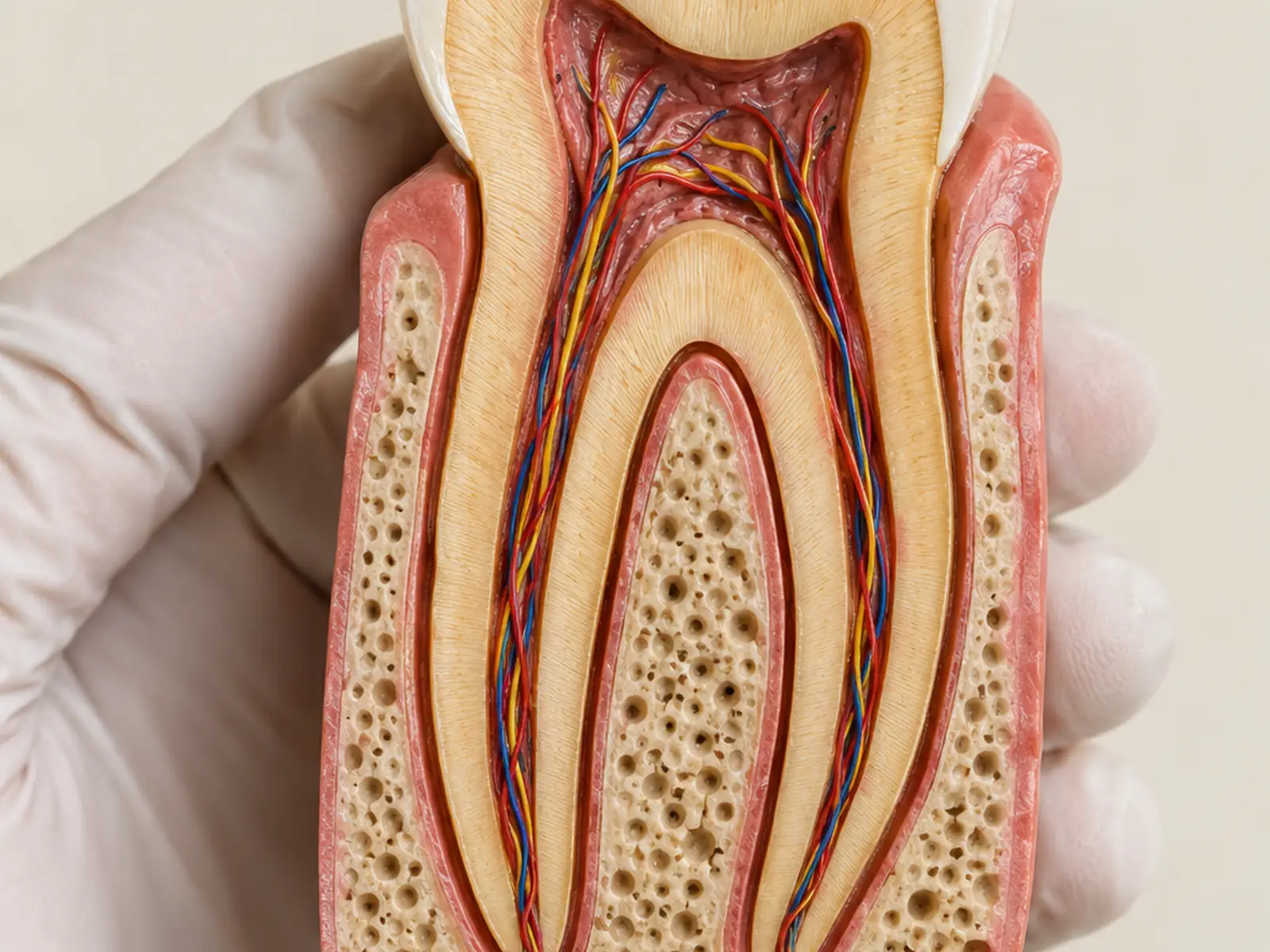
Every tooth has a small chamber inside it that contains a soft tissue called the pulp — nerves, blood vessels and connective tissue. When decay, a deep filling, a crack or an injury lets bacteria reach the pulp, it can become inflamed or infected. That is when the tooth starts to hurt, especially with heat or pressure, or when an abscess forms at the tip of the root.
Root canal therapy, also called endodontic treatment, removes the diseased pulp, cleans and shapes the narrow canals inside the roots and fills them with a sealing material so bacteria cannot re-enter. After treatment the tooth is usually restored with a filling and, in most cases, a crown, because a tooth without its internal blood supply becomes more brittle and needs protection from chewing forces.

When root canal treatment is the right choice
Root canal therapy may be needed when:
- You have persistent tooth pain, particularly pain that lingers after hot or cold food, pain waking you at night, or pain when you bite down.
- A tooth has developed swelling, a pimple on the gum, a bad taste or an abscess visible on an X-ray.
- Deep decay, a large existing filling or a crack has reached the nerve of the tooth.
- An injury such as a knock has damaged the nerve, even if the tooth looks intact.
- The alternative would be losing the tooth to extraction and needing an implant, bridge or partial denture.
If the tooth cannot be saved reliably, the dentist will explain honestly why extraction may be the better option and review replacement choices such as a single-tooth implant or a bridge. Complex cases may be referred to a endodontist when that is the right call for you.
What to expect during root canal treatment at Lambton Dental
- 1
Diagnosis and X-rays
The dentist examines the tooth, tests the nerve response and takes digital X-rays to confirm whether root canal therapy is the appropriate treatment and to see the shape of the roots.
- 2
Comfort and freezing
The tooth and surrounding area are numbed with local anaesthetic. Sedation is available if you would like it, and we take time to make sure you are fully comfortable before starting.
- 3
Access and cleaning
A small opening is made in the top of the tooth, and fine instruments are used to remove the diseased pulp and clean and shape the canals, with disinfecting solutions used along the way.
- 4
Filling the canals
The cleaned canals are filled with a rubber-like sealing material called gutta-percha, and the opening in the tooth is closed with a temporary or permanent filling.
- 5
Number of visits
Many root canals are completed in one visit, but molars with multiple canals or teeth with infection may need two appointments so the canals can settle between visits.
- 6
Final restoration
Once the root canal is complete, a permanent filling and, in most cases, a crown are placed to protect the tooth from cracking under chewing forces.
Nitrous oxide, oral sedation and IV sedation are available for anxious patients; the dentist reviews your health history first. See our sedation options page for more.
What happens after your root canal
Some tenderness in the tooth and surrounding gum is common for a few days after treatment, especially if there was infection before the appointment. Most patients manage well with over-the-counter pain relief and any medication the dentist provides. Chewing on the other side until the final restoration is in place is sensible, since a tooth with only a temporary filling is more likely to chip.
Root-canal-treated teeth generally need a crown to protect them from fracture under chewing forces, and the dentist will discuss when this should be done. Once restored, the tooth can usually last for many years and is cared for like any other tooth, with regular brushing, flossing and professional cleanings. The tooth is checked at each recall visit, and further X-rays may be taken over time to confirm the area around the root is healing well.

Cost, insurance, and CDCP / IFHP coverage
The cost of root canal therapy depends on which tooth is being treated — front teeth typically have one canal, while molars can have three or four — and on how much treatment time is required. The dentist provides a written estimate before treatment begins, and financing is available for treatment plans that need it.
We accept all major Canadian dental insurance carriers and direct-bill wherever your plan allows. Most plans cover root canal therapy under basic or endodontic services, often at a set percentage after a deductible. Where useful, we submit a pre-determination to your carrier so you know your out-of-pocket portion before treatment starts. Lambton Dental is also a provider for the Canadian Dental Care Plan (CDCP) and the Interim Federal Health Program (IFHP); coverage depends on your eligibility and the services provided, and we will confirm what applies before your appointment.
For patients without insurance, our payment options page explains billing openly.
For larger treatment plans, monthly payment plans through a third-party financing partner are available on approved credit — ask at your consultation or see our payment options.


Why patients choose Lambton Dental for root canal therapy
- The dentist takes time to explain why treatment is being recommended and what alternatives you have, so nothing is done without you understanding it.
- Comfort is a priority: topical numbing, careful freezing and, for anxious patients, sedation options are available after a health review.
- Where a case is complex or better served by a endodontist, we say so and refer you appropriately.
- We direct-bill CDCP, IFHP and major insurance carriers wherever your plan allows, and we submit pre-determinations for major work.
- Same-day emergency appointments are available when a tooth is causing significant pain or swelling — see emergency care.
- Our team serves patients in English, French, Italian, Spanish, Portuguese, Hindi, Punjabi, Urdu, Tagalog, Vietnamese, Ukrainian, Mandarin and Cantonese.
Related services
Frequently asked questions about root canal therapy
Does a root canal hurt?
Modern root canal treatment is usually comfortable. The tooth and surrounding area are numbed with local anaesthetic before any work begins, and sedation is available if you would like it. The reputation root canals have often comes from the pain of the underlying infection rather than the treatment itself, which is designed to relieve that pain.
How do I know if I need a root canal?
Common signs include lingering pain after hot or cold food, pain waking you at night, pain when you bite down, swelling near the tooth, a pimple on the gum or a bad taste from the area. Sometimes the tooth has darkened or a deep filling or crack is visible. A clinical exam, nerve testing and an X-ray are needed to confirm the diagnosis.
Can I take antibiotics instead of having a root canal?
Antibiotics may temporarily reduce swelling and pain from an infection, but they do not resolve the underlying problem inside the tooth. Bacteria continue to grow in the pulp space, and symptoms almost always return. Root canal therapy or extraction is the treatment that addresses the source, and the dentist will explain when antibiotics are or are not appropriate for you.
How long does the appointment take?
A straightforward front-tooth root canal may take about an hour, while a molar with multiple canals can take longer and is sometimes completed over two visits. The dentist gives you a realistic time estimate at the diagnostic appointment so you can plan your day.
Why do I need a crown after a root canal?
A tooth that has had a root canal loses its internal blood supply and becomes more brittle, so it is more likely to crack under chewing forces without full-coverage protection. A crown restores strength and seals the tooth against re-infection. Front teeth with small access openings sometimes need only a filling, and the dentist will discuss what your specific tooth needs.
Is extraction a better option than a root canal?
Where a tooth can be saved reliably, keeping your natural tooth is usually preferable — it preserves bone and neighbouring teeth. Extraction plus an implant or bridge is a good option when the tooth cannot be saved. The dentist reviews the honest odds of success and the alternatives with you before you decide.
How long does a root-canal-treated tooth last?
Many root-canal-treated teeth remain in service for many years, often decades, when they are protected with a well-fitting crown and cared for with regular cleanings and exams. Untreated decay at the crown margins, a cracked root or new gum problems are the most common reasons a treated tooth eventually needs re-treatment or extraction.
Relieve tooth pain — book an assessment
If you have persistent tooth pain, swelling or sensitivity, book online or call (416) 666-3700. Same-day emergency appointments are available for significant pain. The dentist will examine the tooth, explain your options and provide a written estimate before any treatment is booked.
CDCP welcome
We welcome patients covered under the Canadian Dental Care Plan and can help you understand what's covered.
Learn about CDCP →IFHP welcome
We are registered to treat patients under the Interim Federal Health Program and bill Medavie Blue Cross directly.
Learn about IFHP →Direct billing
We bill all major Canadian dental insurance carriers directly, so you pay only what your plan does not cover.
How direct billing works →