Porcelain veneers at Lambton Dental
Porcelain veneers are thin, custom-made ceramic shells bonded to the front of a tooth to refine its shape, colour or alignment. At Lambton Dental in West Toronto every veneer case is planned with photos and a mock-up so you can see the result before any tooth is prepared.

What porcelain veneers are
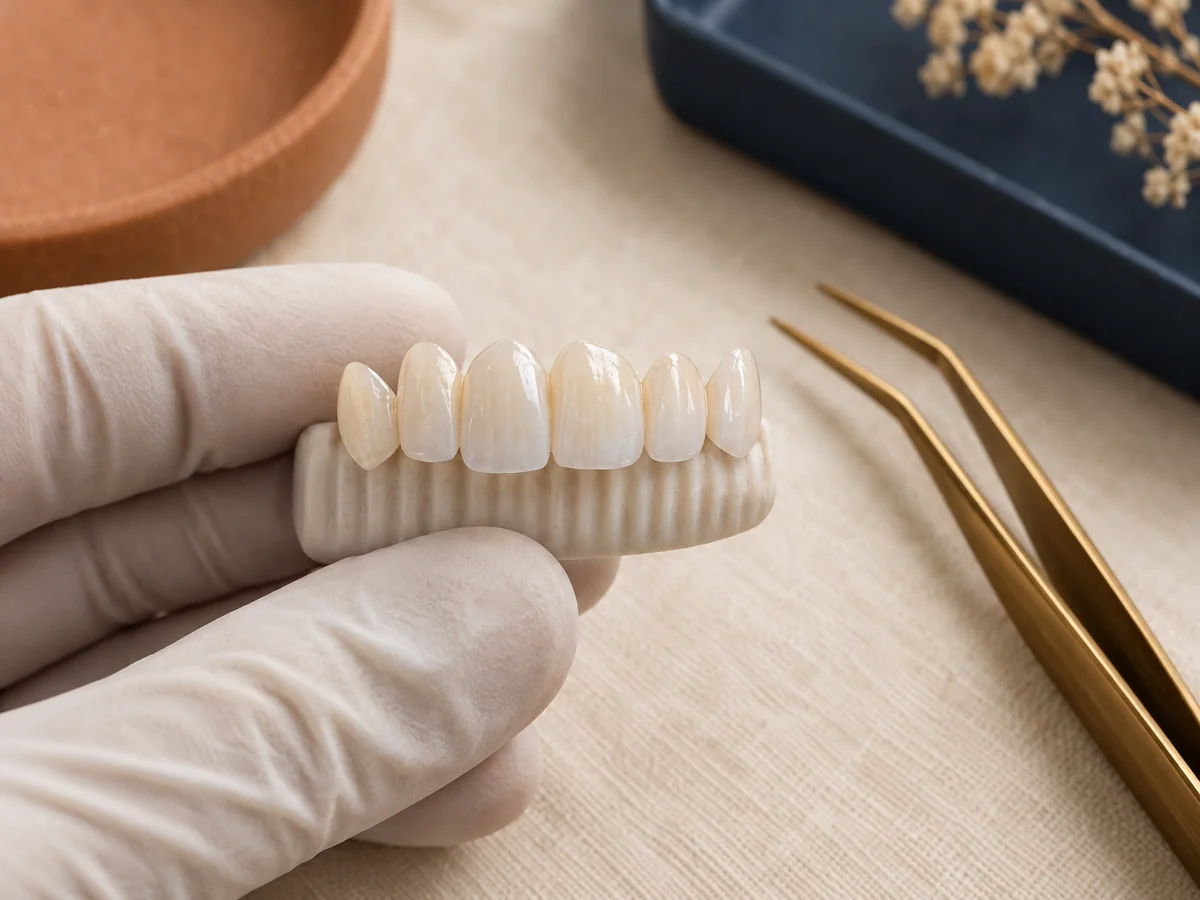
A porcelain veneer is a thin, tooth-shaped shell of dental ceramic that is bonded to the outer surface of a natural tooth to change its shape, colour, position or edge. Veneers are made in a dental laboratory to match the surrounding teeth and are usually placed on the teeth that show most when you smile.
Because veneers cover the front surface rather than the whole tooth, only a small layer of enamel is typically reduced. Compared with a crown, a veneer is more conservative and is chosen when the tooth itself is largely healthy and the change is mainly to appearance. For a small chip or a single reshaped edge, cosmetic bonding may be a more conservative first step.
When veneers are the right option
Porcelain veneers may be a good option when:
- Front teeth are chipped, worn, uneven at the edges or shaped in a way you would like to refine.
- Discolouration does not respond to whitening, such as staining from medication or old restorations.
- Narrow gaps or slight rotations could be masked without orthodontic treatment.
- You would like a more durable, longer-term option than repeated bonding on the same tooth.
If your teeth are heavily broken down, if you grind heavily without a night guard, or if underlying alignment issues are the main concern, the dentist may recommend crowns, orthodontic treatment first, or a combination as part of a smile makeover. Written trade-offs are shared before anything begins.
What to expect during a veneer case
- 1
Consultation and photos
The dentist reviews your smile with you, takes photographs and a set of records, and discusses what is realistic given the shape, colour and position of your existing teeth.
- 2
Mock-up and written plan
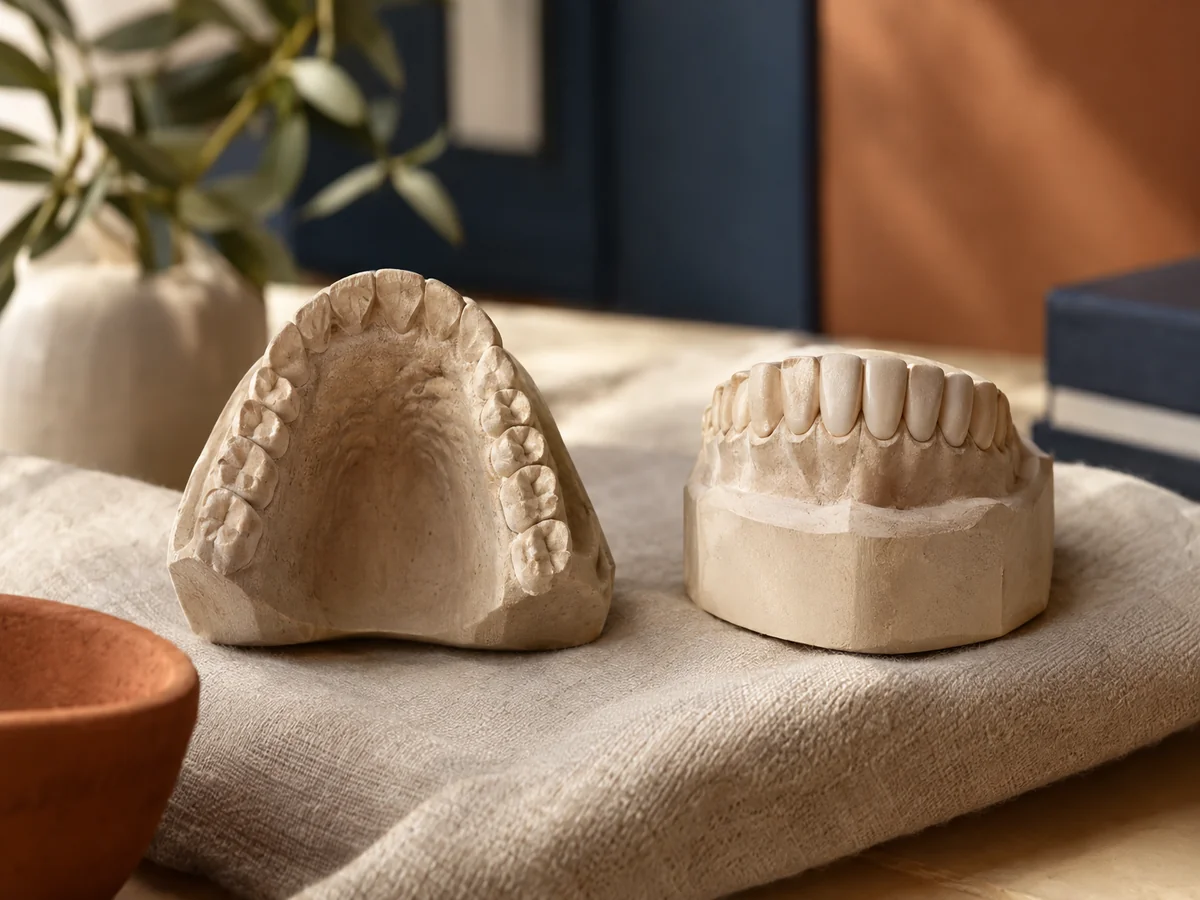
A wax mock-up or in-mouth trial is used so you can preview the proposed shape and length before any preparation. A written estimate covering the number of veneers, materials and any related work is provided at this stage.
- 3
Preparation and temporaries
At the treatment visit, a small layer of enamel is gently prepared, impressions are taken and comfortable temporary veneers are placed so you can go back to normal life while the laboratory makes the finals.
- 4
Try-in and bonding
When the veneers return, they are tried in first for shape, colour and bite, adjusted if needed, then bonded to the teeth and polished.
- 5
Follow-up review
A short review a week or two later checks how the veneers feel, how your bite settles and how the gums are healing around the margins.
Nitrous oxide, oral sedation and IV sedation are available for anxious patients; the dentist reviews your health history first. See our sedation options page for more.
Living with and caring for veneers
Bonded veneers feel like your own teeth within a few days. Some mild tenderness where the gums meet the veneer margin is common early on and settles as the tissue heals. Sensitivity to cold or air, especially if enamel was prepared, usually fades over a few weeks; sensitivity toothpaste can help in the meantime.
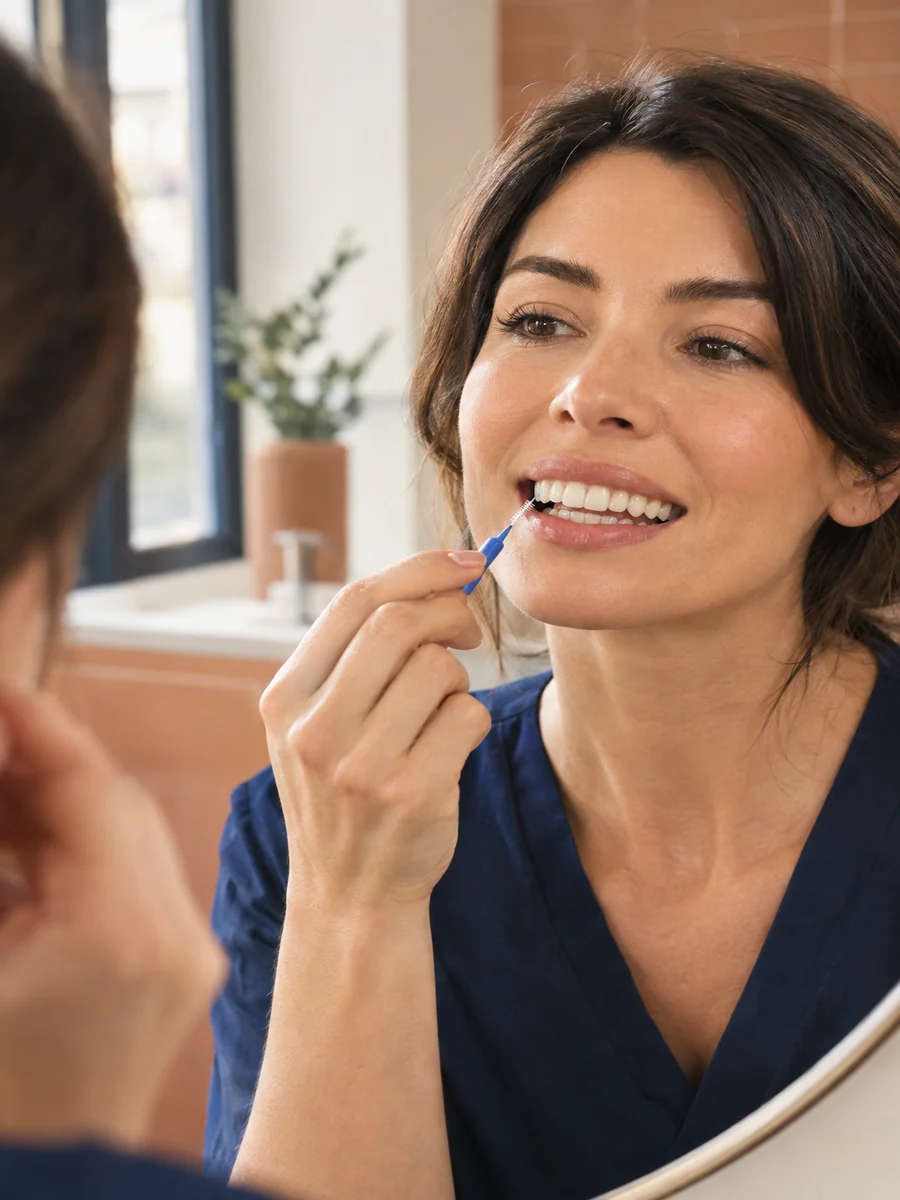
Veneers are cleaned like natural teeth — brushing twice a day, flossing or interdental brushes at the margin, and regular professional cleanings. Habits such as biting fingernails, chewing pens or opening packaging with your teeth can chip the edge of a veneer, so it is worth breaking those habits. If you grind or clench, a custom night guard is strongly recommended to protect your investment. Veneers are checked at each recall visit for margins, staining and edge integrity, and small polishes or adjustments are straightforward.
Cost, insurance, and CDCP / IFHP coverage
The cost of porcelain veneers depends on how many teeth are being treated, the ceramic material chosen and any related work such as whitening or replacement of old restorations. A written estimate is provided after the consultation so you can decide with the full picture in front of you.
Veneers are generally considered a cosmetic service, so most private insurance plans, the Canadian Dental Care Plan (CDCP) and the Interim Federal Health Program (IFHP) do not cover them. Where a veneer is placed for a restorative reason (for example, to rebuild a damaged front tooth) part of the fee may be considered a restorative code — we check the details and direct-bill what your plan allows. Our payment options page explains billing openly for out-of-pocket cases.
For anyone comparing costs between veneers and other options, we lay out veneers alongside cosmetic bonding, whitening and, where relevant, orthodontic treatment so the trade-off between conservative and durable is visible in writing.
For larger treatment plans, monthly payment plans through a third-party financing partner are available on approved credit — ask at your consultation or see our payment options.


Why patients choose Lambton Dental for veneers
- Every veneer case starts with photographs and a wax or in-mouth mock-up so you can preview the shape and length before any preparation begins.
- Written quotes cover the number of veneers, the ceramic material and any related work (whitening, replacement fillings) so there are no surprises.
- Preparation is kept as conservative as the case allows, and comfortable temporaries are placed while the laboratory makes the final veneers.
- Comfort is a priority: topical numbing, gentle freezing and sedation options are available after a health review.
- We direct-bill CDCP, IFHP and major insurance carriers wherever any part of the treatment qualifies.
- Our team serves patients in English, French, Italian, Spanish, Portuguese, Hindi, Punjabi, Urdu, Tagalog, Vietnamese, Ukrainian, Mandarin and Cantonese.
Related services
Frequently asked questions about porcelain veneers
How long do porcelain veneers last?
Well-made and well-cared-for porcelain veneers typically last many years. Longevity depends on the ceramic material, how much natural tooth structure is beneath, your bite, whether you grind and how well you care for them at home. We review the fit, the margins and the shade at each recall visit so small issues are caught early and small polishes can be done in the chair.
Are veneers reversible?
When any enamel has been prepared, the treatment is not fully reversible — the veneer will need to be replaced with a new veneer or another restoration later in life. Some conservative veneers can be done with minimal or no preparation, and we discuss what is realistic in your case.
Will my veneers stain?
Porcelain itself does not stain the way natural enamel does. The margins where the veneer meets your tooth can pick up staining over time, which is one reason we check the margins at each recall cleaning. We polish any stained margins at recall visits, and where a margin has picked up more staining than a polish can address, we discuss whether refreshing the veneer is worthwhile.
Do you have to do all my front teeth?
Not necessarily. Some patients treat only one or two visible teeth, others treat six upper teeth or the smile line. We plan the smallest number of veneers that gives a natural, balanced result. We plan around your smile line so the treated teeth blend with the ones that stay natural, and any needed whitening is usually done first so the shade match is stable.
What happens if a veneer chips?
A small chip can often be polished or repaired with composite bonding. A larger break may need the veneer to be remade. We check the fit and edges at every recall visit so small issues are caught early. We check every veneer at each recall visit for edge integrity and bite, so small issues are addressed before they progress.
Book a veneers consultation
Book online or call (416) 666-3700 to arrange a veneers consultation. The dentist will review your smile, take photographs and provide a written estimate before any preparation is booked.
CDCP welcome
We welcome patients covered under the Canadian Dental Care Plan and can help you understand what's covered.
Learn about CDCP →IFHP welcome
We are registered to treat patients under the Interim Federal Health Program and bill Medavie Blue Cross directly.
Learn about IFHP →Direct billing
We bill all major Canadian dental insurance carriers directly, so you pay only what your plan does not cover.
How direct billing works →